Many factories depend on compressed air every day. The wrong compressor can increase energy bills, cause unexpected downtime, and reduce production efficiency.
To choose an industrial screw air compressor for continuous production, I recommend checking actual air demand, working pressure, operating hours, energy efficiency, cooling capacity, maintenance needs, and spare parts availability. Buyers should compare total operating costs, not only the initial purchase price.
I work with industrial equipment buyers who need reliable machines for factories, processing plants, workshops, and engineering projects. I understand that many buyers compare prices from several suppliers in China before making a decision. Price matters, but production stability matters just as much. I always suggest that buyers start with their actual working conditions. A suitable compressor should provide enough air at the required pressure for the full production process. It should also support long working hours without creating unnecessary energy costs. In this guide, I will explain the main factors I consider when selecting an industrial screw air compressor for continuous production.
Why Is a Screw Air Compressor Suitable for Continuous Production?
A factory can lose time and money when its compressed air supply becomes unstable. A machine that works well for short periods may not meet the needs of a production line that runs all day.
I recommend a screw air compressor for many continuous production applications because it can provide a steady compressed air supply for long operating periods when the model, cooling system, and maintenance plan match the actual workload.
How Does a Screw Air Compressor Support Long Working Hours?
I first look at the production schedule when I help a buyer select an air compressor. Some workshops operate for only a few hours each day. Other factories run two or three shifts. These businesses do not have the same compressed air requirements.
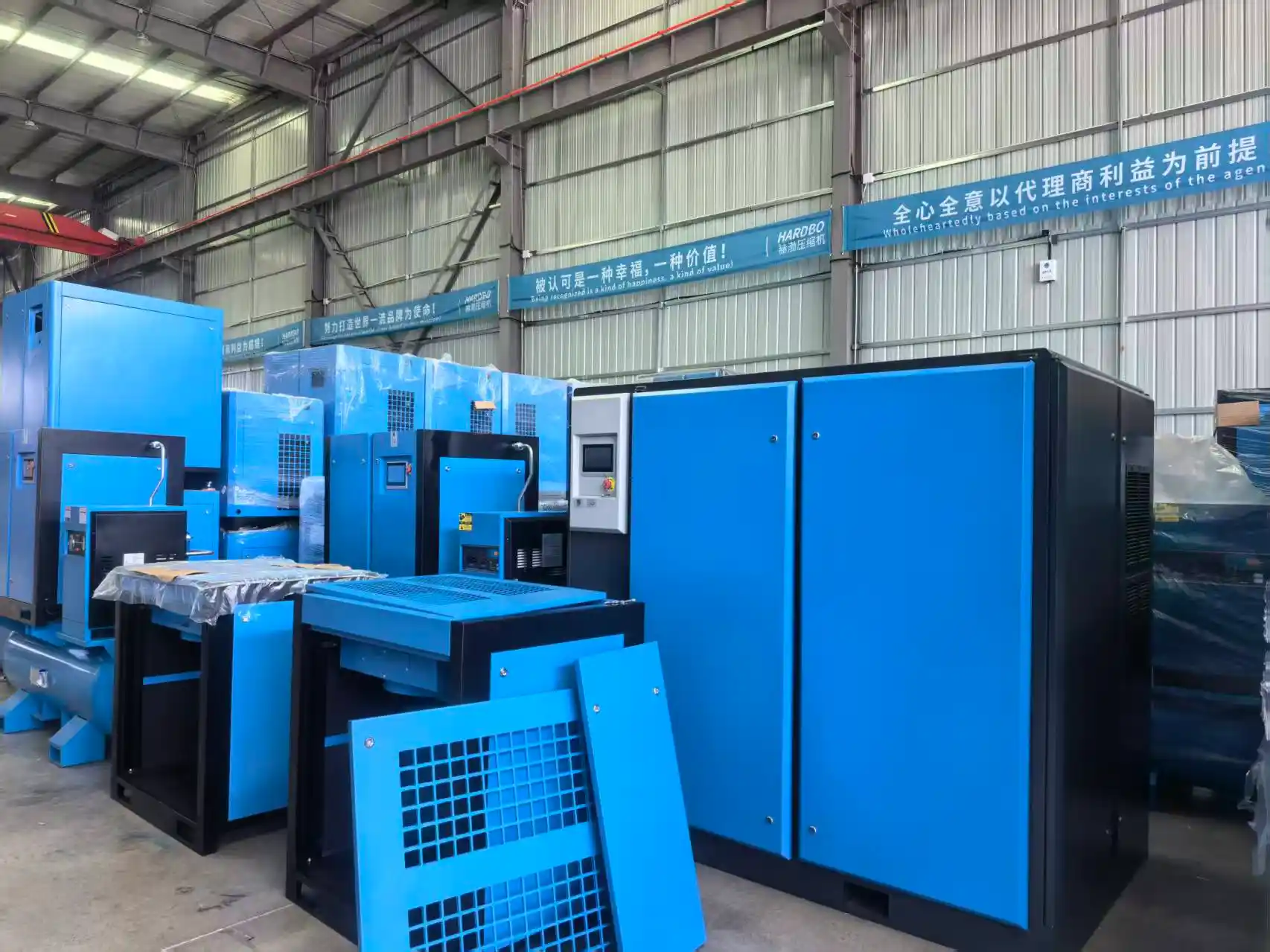
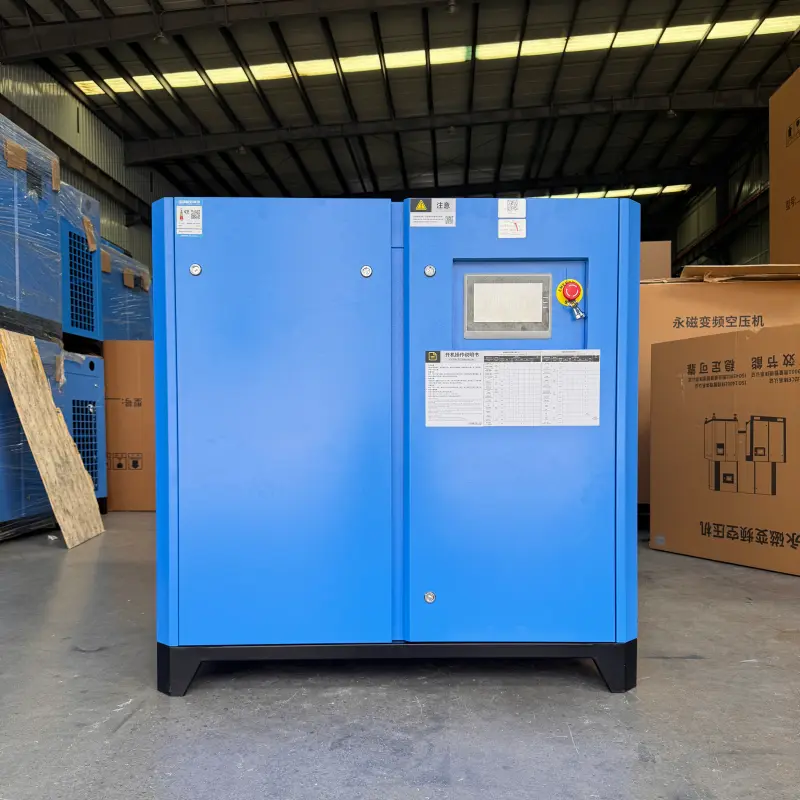
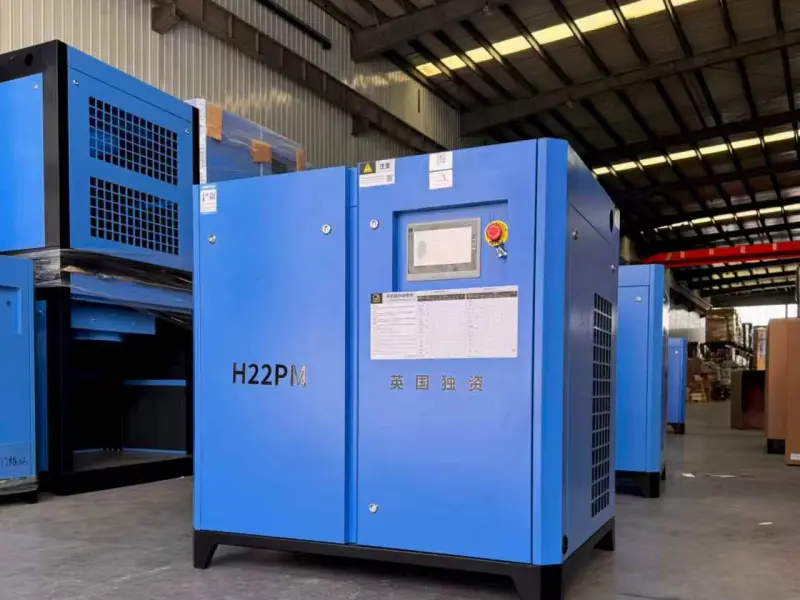
A rotary screw air compressor uses two rotating screw elements to compress air. The design supports a continuous supply of compressed air for many industrial applications. Common uses include pneumatic tools, packaging equipment, automated production lines, spray systems, and manufacturing processes.
I do not recommend choosing a screw compressor simply because a factory operates for long hours. The buyer must also check the required airflow, working pressure, ambient temperature, and daily load pattern.
For example, a metal processing factory may use compressed air for pneumatic controls, cleaning equipment, and several production machines. If these machines operate at the same time, the compressor must supply enough air to meet their combined demand. If the compressor is too small, the system pressure may fall. If the compressor is too large, the buyer may pay more for equipment that does not provide a useful benefit.
I believe a reliable selection starts with production data. I ask buyers how many machines use compressed air, how long they run, and whether they operate simultaneously. These details help me understand the real demand before I discuss a model.
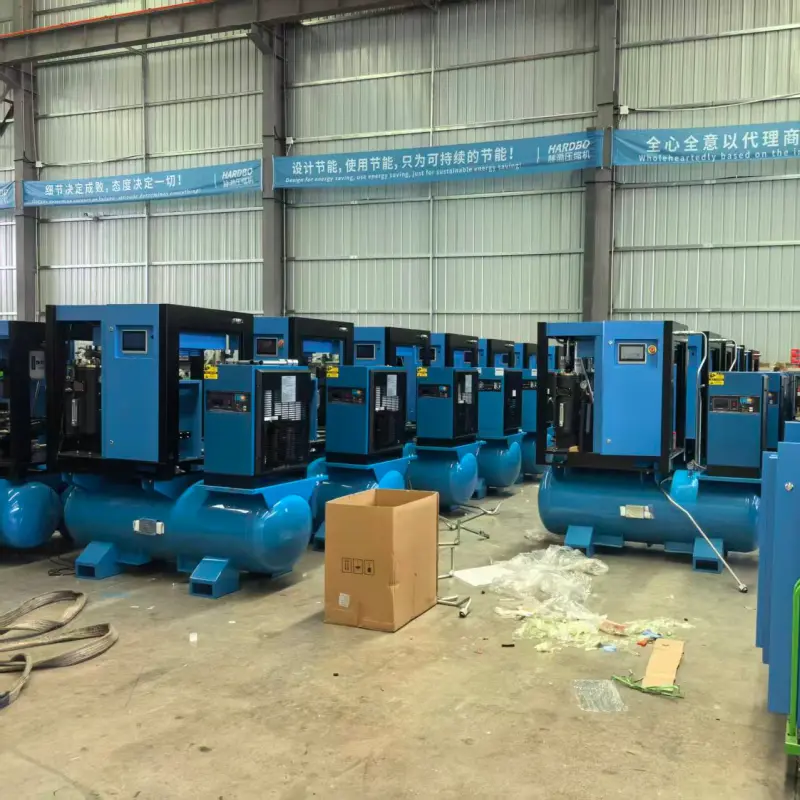
What Is the Difference Between Screw and Piston Air Compressors?
I often see buyers compare screw and piston compressors based on purchase price alone. This approach can lead to a poor decision because the two designs suit different operating conditions.
A piston air compressor can be a practical option for workshops with intermittent air demand. A screw air compressor is often more suitable for factories that need a steady supply over long operating periods. However, the correct choice still depends on the required pressure, airflow, duty cycle, and maintenance plan.
| Comparison factor | Screw air compressor | Piston air compressor |
|---|---|---|
| Typical application | Industrial production and regular air demand | Workshops and intermittent applications |
| Air supply | Suitable for a steady supply when correctly sized | Often suitable for demand with frequent pauses |
| Operating pattern | Can support long operating hours according to the model specification | Depends on the model's permitted duty cycle |
| Initial investment | Often higher for comparable industrial capacity | Often lower for smaller capacities |
| Maintenance | Requires scheduled service for filters, lubricant, and other model-specific parts | Requires scheduled service for valves, rings, lubricant, and other model-specific parts |
| Noise and vibration | Often smoother in operation, depending on the design and installation | Can produce more vibration and noise, depending on the model |
| Selection priority | Air demand, energy use, cooling, and control | Air demand, duty cycle, pressure, and budget |
I use this table as a starting point, not as a final decision rule. Some piston compressors are designed for demanding industrial applications, and some screw compressors are not suitable for every operating condition.
Buyers can also read the U.S. Department of Energy's guidance on compressed air systems. It explains why system design, demand management, and equipment operation all affect overall performance.
Why Should I Consider the Whole Production System?
I do not treat the compressor as an isolated machine. The air receiver, air dryer, filters, pipes, drains, and control system also affect the final result.
A compressor may deliver enough air at its outlet, but the production equipment may still receive insufficient pressure because of undersized pipes, clogged filters, or air leaks. Moisture can also cause problems in pneumatic controls and other equipment.
I recommend checking the complete compressed air system before purchasing a new compressor. The buyer should identify the most demanding applications and confirm the required air quality at each point of use.
For continuous production, I also consider the consequences of a compressor failure. A factory with one critical production line may need a backup plan. That plan could involve a standby compressor, a suitable air receiver, or another arrangement based on the cost of downtime and the required level of reliability.
I believe buyers should compare the cost of the complete solution rather than the compressor package alone. A slightly more expensive system may be a better investment if it provides the required air quality, stable pressure, and easier maintenance.
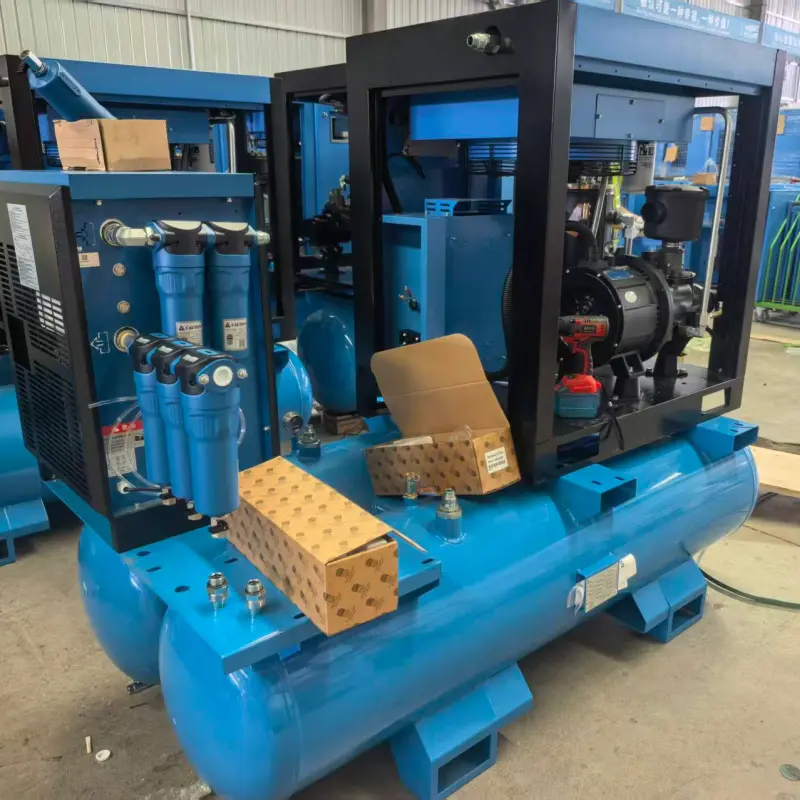
How Do I Calculate the Required Airflow, Working Pressure, and Motor Power?
An incorrectly sized compressor can create problems even when the machine comes from a reliable manufacturer. A small compressor may struggle to maintain pressure, while an oversized compressor may consume more money than necessary.
I calculate compressor requirements by reviewing total air consumption, simultaneous demand, required working pressure, operating hours, and future production needs. I then compare verified free air delivery, motor power, and operating limits for suitable models.
How Much Airflow Does My Factory Need?
I start with the air consumption of each machine or process. I ask the buyer for the equipment specifications whenever possible. These specifications are more useful than a general statement such as "we need a 30 kW compressor."
The buyer should identify the airflow required by each machine, the operating pressure, and the percentage of time that each machine uses compressed air. The buyer should also identify which machines operate at the same time.
The following example shows how I organize this information. The figures are illustrative and do not represent measured performance from a real factory.
| Air-consuming equipment | Example air demand | Operating condition |
|---|---|---|
| Pneumatic production machine A | 0.8 m³/min | Regular operation |
| Pneumatic production machine B | 0.6 m³/min | Regular operation |
| Packaging equipment | 0.3 m³/min | Intermittent operation |
| Cleaning tools | 0.2 m³/min | Occasional operation |
| Estimated combined demand before adjustments | 1.9 m³/min | Depends on actual use |
I would not automatically add every maximum airflow figure and select a compressor with the same output. Some equipment does not operate continuously, and different machines may have different load patterns. At the same time, I would not assume that all equipment operates independently.
I recommend recording actual demand over a representative production period when the factory already has a compressed air system. A flow meter or a professional system assessment can help reveal demand peaks and periods of low use.
After estimating demand, I check the compressor's free air delivery, or FAD. FAD represents the air delivered under stated reference conditions. It is more useful for comparing compressor output than theoretical displacement alone.
The buyer should confirm the pressure and reference conditions attached to the published FAD figure. Two models with similar motor power may not deliver the same airflow at the same pressure.
How Should I Choose the Working Pressure?
I always ask buyers to confirm the pressure required at the point of use. The compressor's discharge pressure must account for the pressure required by the equipment and the losses across the system.
For example, a production machine may require a stable pressure of 7 bar at its inlet. The compressor may need to operate at a higher pressure to cover losses in the air dryer, filters, pipes, and fittings. The exact difference depends on the system design.
I do not recommend increasing the compressor pressure without checking the cause of a pressure problem. A clogged filter or a leaking pipe can create a pressure drop. Increasing the pressure setting may raise energy consumption without fixing the underlying problem.
I use the following checklist when reviewing pressure requirements:
- Required pressure at the most demanding point of use.
- Compressor discharge pressure at the expected operating condition.
- Pressure loss across the dryer and filters.
- Pressure loss through the distribution network.
- Pressure variation during peak demand.
- Maximum permitted pressure for downstream equipment.
- Pressure settings required by the manufacturer's instructions.
The buyer should also check whether all applications need the same pressure. Some factories use different pressure levels for different processes. In that case, a system review may identify a better arrangement than operating the entire network at the highest pressure.
The ISO 1217 standard for displacement compressor acceptance tests provides methods for evaluating flow rate and power requirements. I recommend discussing the applicable test conditions and performance documentation with the supplier when verified performance is important to the purchase.
Does Motor Power Tell Me Which Compressor to Buy?
Motor power is important, but it does not tell me everything I need to know. A motor rating in kilowatts indicates the motor's rated power. It does not independently confirm the airflow that the compressor can deliver at a particular pressure.
I compare motor power with FAD, discharge pressure, specific power, and the expected operating pattern. I also ask whether the quoted power refers to the main motor or the total electrical input of the complete package.
The following table shows how I compare model data. The entries are evaluation criteria, not specifications for particular products.
| Parameter | What I check | Why it matters |
|---|---|---|
| Motor power | Rated kW and electrical supply | Helps confirm electrical compatibility and power requirements |
| Free air delivery | Flow at the specified pressure and reference conditions | Shows whether the compressor can meet production demand |
| Working pressure | Rated pressure and permitted operating range | Helps match the compressor to the application |
| Specific power | Electrical input relative to delivered airflow | Supports energy-efficiency comparisons |
| Control method | Fixed-speed or variable-speed operation | Affects how the compressor responds to changing demand |
| Cooling method | Air-cooled or water-cooled configuration | Helps confirm suitability for the installation environment |
| Electrical frequency | 50 Hz or 60 Hz, as required | Helps confirm motor and package compatibility |
| Service requirements | Recommended intervals and parts | Helps estimate maintenance cost and downtime risk |
I also check the local electrical supply before confirming a model. Voltage, frequency, phase, and starting requirements must match the customer's site.
I believe a supplier should provide a clear technical quotation instead of sending a model name and price alone. I prefer to compare the complete technical data for two or three suitable models. This method gives the buyer a stronger basis for evaluating price and performance.
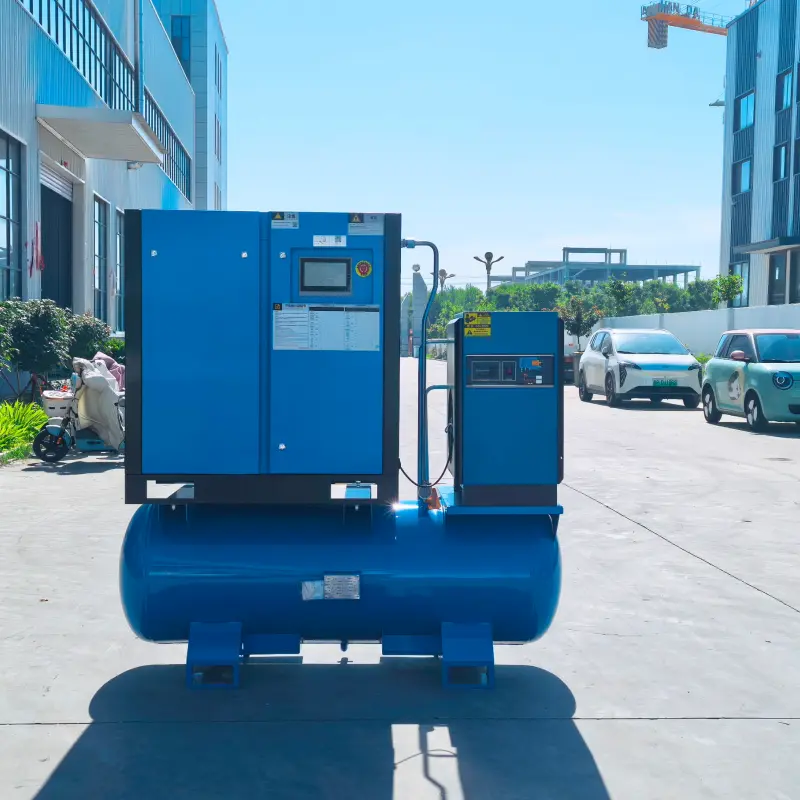
How Can I Reduce Energy Costs and Prevent Downtime During Continuous Operation?
Energy costs can affect the total cost of owning an industrial air compressor. Unexpected downtime can create another problem when a factory depends on compressed air for every shift.
I reduce operating risks by matching compressor capacity to actual demand, checking specific power, controlling air leaks, maintaining filters and cooling systems, and confirming spare parts and service support before purchase.
How Can I Compare Energy Consumption?
I encourage buyers to look beyond the purchase price when comparing industrial screw air compressors. A compressor that runs for many hours each day can consume a large amount of electricity over its service life.
I begin by asking for the expected operating hours, the electrical tariff, the expected load pattern, and the compressor's verified power data. I then use those figures to estimate energy costs.
A simple estimate is:
Annual electricity cost = Average electrical input (kW) × Annual operating hours × Electricity price per kWh
For example, consider a hypothetical compressor that draws an average of 22 kW, operates for 6,000 hours per year, and uses electricity priced at $0.12 per kWh.
The estimated annual electricity cost would be:
22 kW × 6,000 hours × $0.12 = $15,840.
This is an illustrative calculation. The actual result depends on measured power, load variation, operating hours, and the local electricity tariff.
I also compare specific power when reliable data is available. Specific power helps show how much electrical input is required for a given amount of compressed air. Buyers should compare models at equivalent operating pressures and under comparable test conditions.
A variable-speed screw compressor may help when air demand changes throughout the day. The drive adjusts motor speed to follow demand within the manufacturer's permitted operating range. However, a variable-speed model is not automatically the best option for every factory. A fixed-speed compressor may be suitable when demand stays relatively steady near the design point.
I ask buyers to review the load profile before paying extra for a control system. I also recommend considering the cost of filters, lubricants, maintenance, and other service items when comparing the total cost of ownership.
The U.S. Department of Energy's compressed air resources can help buyers understand system efficiency and identify areas for improvement.
How Do Air Leaks and Poor Maintenance Affect Production?
I pay close attention to air leaks because they can waste energy and reduce the pressure available to production equipment. A compressor may run longer to replace lost air. This can increase electricity use and add unnecessary operating hours.
Leaks can occur at pipe connections, hoses, valves, couplings, drains, and pneumatic equipment. Some leaks are easy to hear, but smaller leaks may need a proper inspection method.
I recommend that factories include leak detection in their maintenance plans. Staff should record identified leaks, repair them, and check the system again. The factory should also monitor pressure and compressor operating time to identify changes that may indicate a new problem.
Maintenance is just as important. I advise buyers to confirm the service schedule for the exact model before placing an order. The schedule may include checks or replacements for the air filter, oil filter, oil separator, lubricant, belts, and other model-specific components.
The following table shows the maintenance areas I would discuss with a supplier.
| Maintenance area | What I check | Possible production impact |
|---|---|---|
| Air intake filter | Condition and replacement interval | Restricted intake can affect performance |
| Lubricant | Correct type, level, and service interval | Poor lubrication can increase wear and failure risk |
| Oil separator | Pressure drop and replacement requirements | A restricted or worn separator can affect operation |
| Cooling system | Cooler cleanliness and airflow | Poor cooling can cause high-temperature problems |
| Air dryer and filters | Drain operation and filter condition | Moisture or contaminants can affect downstream equipment |
| Air leaks | Connections, hoses, valves, and pipes | Leaks increase demand and energy use |
| Electrical system | Connections, protection, and alarms | Electrical problems can cause unexpected stops |
I do not recommend using the same maintenance interval for every installation. Dust, high ambient temperatures, operating hours, and the manufacturer's instructions can change the required schedule.
The U.S. Department of Energy's compressed air system sourcebook provides further guidance on maintenance, leaks, filters, and system performance.
How Should I Plan for Spare Parts and After-Sales Support?
I believe spare parts availability should be part of the purchasing decision, especially for factories that operate continuously. A small component can cause a long delay if the correct replacement is difficult to obtain.
Before I recommend a compressor, I suggest that buyers ask the supplier for a spare parts list. The list should identify consumable parts, recommended replacement intervals, and the information needed to order the correct components.
I also recommend confirming the following points before payment:
- Which spare parts are included with the machine.
- Which parts are recommended for the first year of operation.
- Whether the supplier can provide parts by model and serial number.
- How the supplier handles technical questions and warranty claims.
- Whether the supplier can provide operating manuals and maintenance instructions.
- How long common parts usually take to prepare and ship.
- Whether the supplier can support remote troubleshooting.
For importers and industrial equipment dealers, these details can also affect resale and customer service. A dealer who can obtain the correct filters, separators, and other parts can support local customers more effectively.
I do not promise that every issue can be solved remotely. Some faults require a trained technician to inspect the equipment in person. However, clear documentation and fast communication can help buyers identify problems and decide what to do next.
I also recommend discussing backup capacity when downtime would cause major losses. A factory may choose a standby compressor or another suitable backup arrangement. The correct design depends on the production process, the cost of interruption, and the level of reliability the factory needs.
What Should I Confirm Before Ordering from a Chinese Supplier?
I know that international buyers often compare several Chinese suppliers before making a decision. They need clear specifications, reliable communication, and a realistic delivery plan.
I recommend requesting a complete quotation with the model, motor power, rated pressure, FAD, electrical requirements, cooling method, and included accessories. The quotation should also state the warranty terms, delivery time, packing method, payment terms, and any customization requirements.
Buyers should request a technical data sheet and ask how the supplier verifies performance. Where applicable, they can discuss acceptance testing based on ISO 1217. The buyer and supplier should agree on the test conditions and acceptance criteria before the order is finalized.
I also suggest asking for product photographs, a nameplate photograph, and a video of the machine operating when these materials are available. For a factory order, a third-party inspection may be appropriate if the order value or project requirements justify the cost.
I believe a good supplier should explain technical differences in simple language. The supplier should not pressure a buyer to select a larger model without explaining why the additional capacity is needed.
For smaller trial orders, I recommend confirming the minimum order quantity and checking whether the supplier can support a practical initial purchase. Buyers should also ask whether spare parts can be added to the shipment.
At Yichen, I focus on understanding the buyer's application before discussing a suitable air compressor solution. Buyers can contact me at sales@chinaaircompressor.com or visit cnscrewair.com to discuss their requirements. I encourage buyers to provide their required airflow, working pressure, operating hours, and local power supply so that we can start with the right technical questions.
Conclusion
I recommend choosing a screw air compressor based on verified airflow, working pressure, energy costs, maintenance needs, and spare parts support to protect continuous production.