An undersized air compressor can cause unstable cutting pressure, poor edge quality, and unexpected production delays. Choosing the wrong system can also increase energy costs.
A laser cutting machine needs compressed air that meets the manufacturer's required working pressure, airflow, and air quality. The exact requirements depend on the laser model, cutting head, nozzle, material, thickness, and cutting process. Buyers should confirm these specifications before selecting a compressor, dryer, filters, and air storage tank.
When I help buyers compare industrial air compressors, I focus on the actual working conditions rather than motor power alone. A laser cutting machine may need a different air supply from a general workshop machine. Some systems use compressed air as an assist gas during cutting. Other systems use nitrogen or oxygen for certain materials and cutting conditions. These choices affect pressure, airflow, air quality, and operating costs. I believe buyers should confirm the laser manufacturer's requirements first. They can then select a suitable screw air compressor, air dryer, storage tank, and filtration system. In this guide, I will explain how I evaluate these factors before recommending an air compressor for laser cutting.
What Air Pressure Does a Laser Cutting Machine Need?
A compressor that cannot maintain the required pressure may interrupt the cutting process. Buyers need to understand the pressure at the laser inlet, not just the maximum pressure shown on the compressor nameplate.
The required air pressure depends on the laser cutting machine, cutting head, nozzle, material, and cutting process. Some applications use ordinary compressed air at relatively low pressure, while industrial fiber laser cutting with compressed air as an assist gas may require much higher pressure. I always check the machine manufacturer's specifications before selecting a compressor.
Why Does Laser Cutting Require a Specific Air Pressure?
I first ask buyers how they plan to use compressed air in their laser cutting system. This question matters because compressed air can serve different purposes.
In some laser applications, compressed air helps remove debris during cutting or engraving. In industrial metal cutting, compressed air can act as an assist gas. The gas helps remove molten material from the cutting area and supports the cutting process.
The required pressure can vary greatly between these applications. A small laser engraving system may need a much lower air supply capacity than an industrial fiber laser cutting machine. A high-power fiber laser may require a specialized high-pressure compressor package.
I do not recommend using one pressure figure for every laser cutting machine. The laser manufacturer's documentation should define the required pressure at the machine connection or cutting head, depending on the system design.
For example, some industrial fiber laser systems use compressed air at pressures around 16 bar or higher. Other applications may require a different pressure range. These figures are examples only. They are not universal requirements for all fiber lasers.
I also remind buyers that pressure at the compressor outlet is not always the same as pressure at the cutting machine. Air dryers, filters, regulators, pipes, hoses, and fittings can create pressure losses. A system that reaches the required pressure when no air is flowing may still fail to maintain that pressure during cutting.
I believe the correct approach is to confirm the operating pressure under real demand. The buyer should ask the laser manufacturer for the required pressure, while the compressor supplier should confirm the delivered airflow at that pressure.
How Do I Calculate the Required Compressor Pressure?
I do not calculate the compressor pressure by adding an arbitrary number to the laser manufacturer's specification. I first review the complete air supply system.
The process starts with the required pressure at the laser. I then consider the pressure loss through the air treatment equipment and distribution pipes. The compressor must provide enough pressure to maintain the required value at the point of use.
The following table shows the main factors I review.
| Factor | What I check | Why it matters |
|---|---|---|
| Laser inlet pressure | Required pressure from the machine manufacturer | Establishes the actual application requirement |
| Compressor discharge pressure | Rated and permitted operating pressure | Confirms that the compressor can support the system |
| Air dryer pressure drop | Pressure loss at the expected airflow | Helps prevent insufficient pressure after drying |
| Filter pressure drop | Pressure loss across each filter stage | Shows whether treatment equipment affects delivery |
| Pipe and hose pressure drop | Pipe diameter, length, fittings, and valves | Helps maintain pressure at the laser |
| Operating demand | Pressure while cutting at the expected workload | Confirms performance under real conditions |
| Pressure regulation | Settings and control range | Helps prevent unsuitable pressure at the machine |
I also check the compressor's maximum permitted pressure and its continuous operating conditions. A compressor advertised with a high maximum pressure may not provide the required airflow at that pressure.
This point is important when buyers compare models from different suppliers. I recommend asking for the compressor's performance data at the intended operating pressure. Buyers should not compare airflow figures that were measured under different conditions.
For technical verification, buyers can review ISO 1217:2009, Displacement Compressors — Acceptance Tests. This standard covers methods for testing compressor volume flow rate and power requirements. The buyer and supplier should agree on the applicable test conditions before ordering.
Does Higher Pressure Always Improve Laser Cutting?
I do not believe higher pressure automatically produces better cutting results. The correct pressure depends on the cutting head, nozzle, material, thickness, and process settings.
When the pressure is too low, the assist gas may not remove molten material as intended. This can affect the cut edge, increase dross, or reduce process stability. However, pressure alone does not determine cutting quality.
A higher pressure may increase energy consumption and place additional demands on the compressor, dryer, filters, and pipework. It may also exceed the operating requirements of the machine if the system is not configured correctly.
I recommend confirming the required pressure for the specific cutting conditions. The buyer should also check whether the laser manufacturer specifies different settings for different materials or thicknesses.
For example, the pressure and gas requirements for cutting thin carbon steel may differ from those for cutting thicker stainless steel. The same machine may also use different assist gases for different jobs.
I encourage buyers to request the manufacturer's cutting parameter recommendations instead of relying on a general compressor sales chart. The supplier should explain the available pressure and airflow, but the laser manufacturer should confirm the cutting requirements.
My view is simple: buyers should select a compressor that can maintain the required pressure and airflow with suitable operating margin. They should not pay for unnecessary pressure capacity without a clear technical reason.
How Much Airflow Does a Laser Cutting Machine Need?
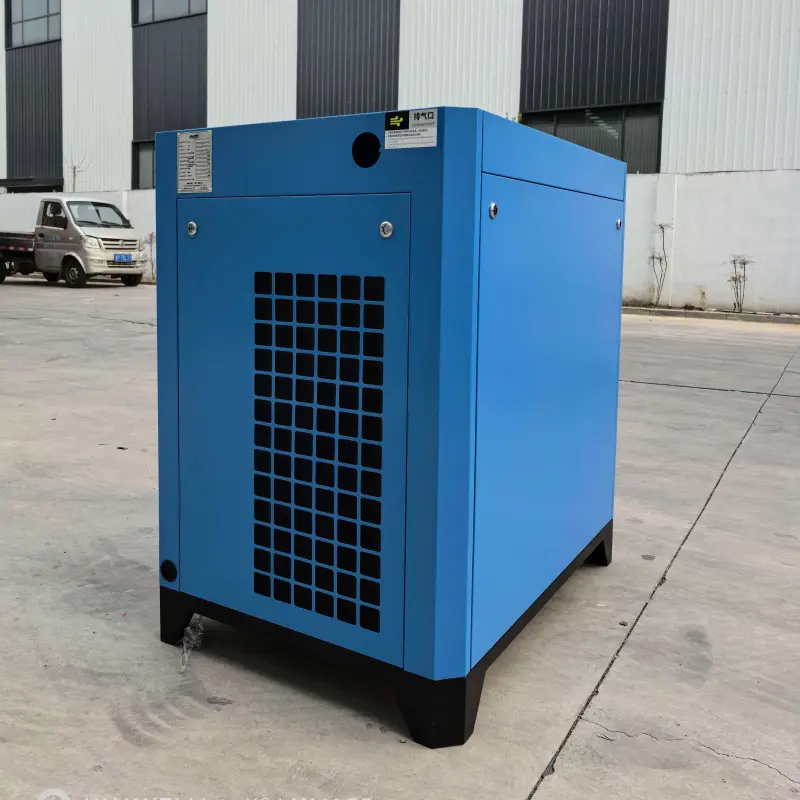
A compressor can reach the correct pressure but still fail to supply enough air during cutting. Buyers must check airflow at the required operating pressure and consider the machine's actual production cycle.
The required airflow depends on the laser cutting system, nozzle, cutting pressure, material, and operating conditions. I recommend checking the machine manufacturer's air consumption data and selecting a compressor that provides sufficient delivered airflow at the required pressure, including the demand of any other connected equipment.
What Is the Difference Between Air Pressure and Airflow?
I explain pressure and airflow separately because buyers sometimes treat them as the same specification.
Pressure describes the force available in the compressed air system. Airflow describes the volume of air delivered over a period of time. A laser cutting system needs both values to meet its operating requirements.
For example, a compressor may provide a high pressure but insufficient airflow. The system may reach its target pressure when the laser is idle, but pressure can fall when cutting begins and air consumption increases.
Another compressor may provide a high airflow at a lower pressure. That compressor may also be unsuitable if it cannot maintain the pressure required by the cutting head.
I therefore compare airflow and pressure together. I also check how the supplier measures airflow.
Airflow may be shown in liters per minute (L/min), cubic meters per minute (m³/min), or cubic feet per minute (CFM).
The following conversions are useful when comparing quotations:
- 1 m³/min = 1,000 L/min.
- 1 CFM is approximately 28.32 L/min.
- 1 m³/min is approximately 35.31 CFM.
However, unit conversion alone does not make two airflow figures directly comparable. The figures must use compatible measurement conditions.
I pay particular attention to the difference between theoretical displacement and free air delivery (FAD). Theoretical displacement describes the volume swept by the compressor's moving parts. FAD describes delivered air under defined reference conditions. Actual performance depends on the compressor design and operating conditions.
I recommend asking suppliers to state the airflow measurement method and the pressure at which the compressor can provide the quoted performance.
How Do I Estimate Airflow for a Laser Cutting System?
I start with the technical data provided by the laser manufacturer. The data should identify the required pressure and airflow for the intended application.
I then check whether the compressor will supply only the laser or also other equipment. Some factories connect pneumatic tools, cleaning equipment, or other machines to the same air system. These additional loads can affect the available airflow.
The following table shows the information I collect before discussing a compressor model.
| Requirement | Information to collect | How I use it |
|---|---|---|
| Laser model | Manufacturer and exact model | Identifies the correct technical requirements |
| Laser power | Rated laser output | Provides context, but does not determine compressor size by itself |
| Cutting head | Model and permitted operating conditions | Helps confirm pressure and airflow needs |
| Assist gas | Compressed air, nitrogen, oxygen, or another specified gas | Defines the intended process |
| Required pressure | Manufacturer's stated working pressure | Establishes the pressure target |
| Required airflow | Flow demand at the stated pressure | Helps determine compressor capacity |
| Operating schedule | Cutting hours and shifts | Helps assess continuous-duty requirements |
| Other air loads | Connected tools and equipment | Prevents the system from being undersized |
| Future expansion | Planned additional machines | Helps avoid unnecessary replacement later |
I do not use laser power alone to select the compressor. Two laser machines with similar power ratings may have different air requirements because their cutting heads, nozzles, and operating processes differ.
If the buyer cannot provide the airflow requirement, I recommend contacting the laser manufacturer or installation engineer. I do not think a supplier should guess the required capacity from a machine's power rating alone.
Once I know the demand, I compare suitable compressor models using their delivered airflow at the required pressure. I also review the air treatment system because the dryer and filters can affect the amount of air available at the machine.
For example, the GWEIKE laser cutting air compressor guide discusses compressor selection for specific fiber laser applications. I use manufacturer-specific guides as a reference, but I still recommend confirming the final requirements for the exact machine being purchased.
Should I Choose a Screw Air Compressor for Laser Cutting?
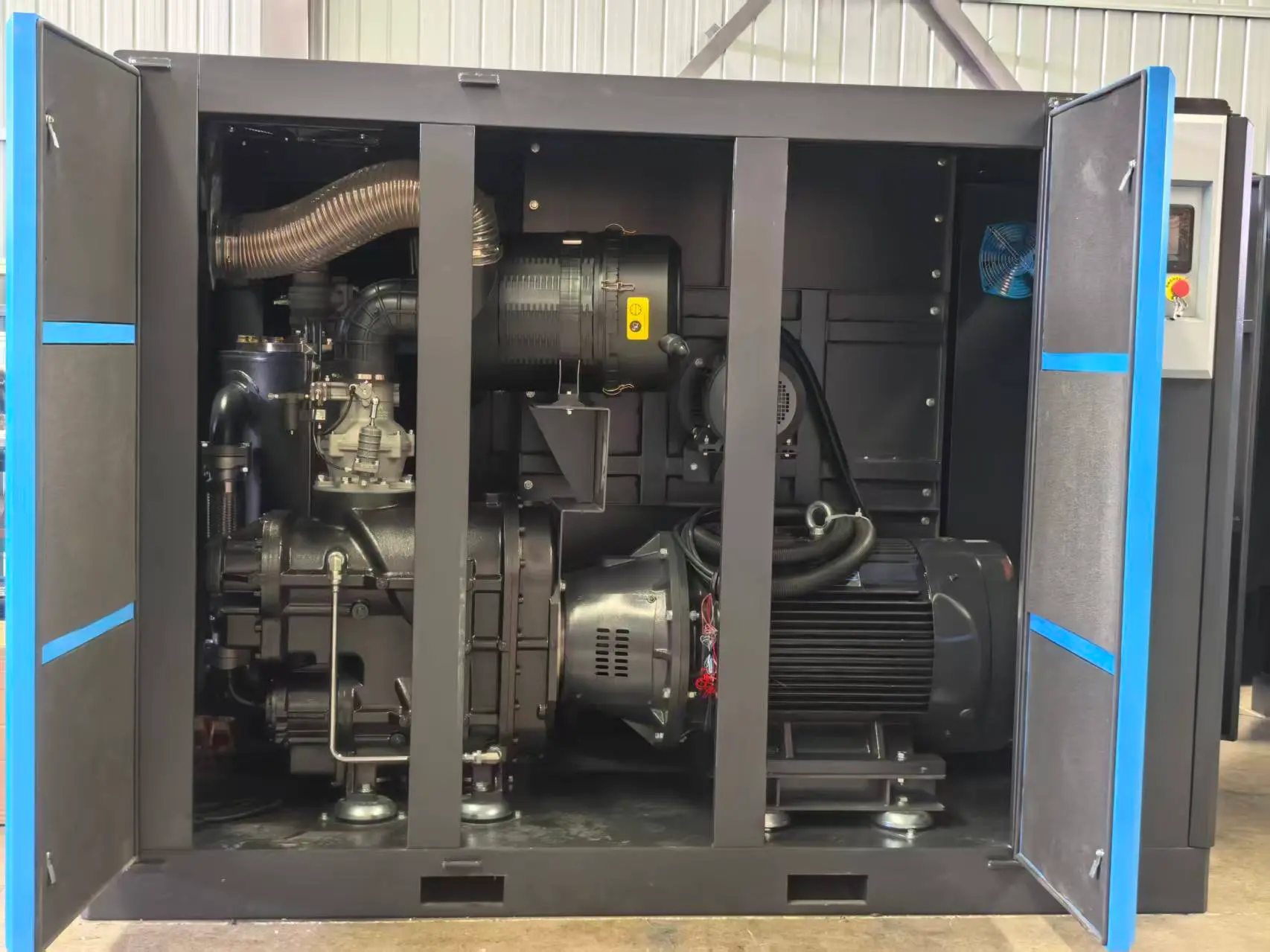
I often recommend considering a screw air compressor when a factory needs a stable compressed air supply over long production periods. However, the correct choice depends on the required pressure, airflow, operating hours, and system design.
A screw compressor can be suitable for industrial applications that need a regular air supply. It can also be configured as part of a system with a high-pressure package, an air receiver, a dryer, and filters.
A piston compressor may be suitable for some smaller or intermittent applications. However, buyers should check the permitted duty cycle, delivered airflow, pressure, and cooling requirements before using one for laser cutting.
I compare the two types using the following criteria.
| Comparison factor | Screw air compressor | Piston air compressor |
|---|---|---|
| Typical use | Regular industrial air demand | Smaller or intermittent air demand, depending on model |
| Continuous operation | Many models support long operating periods within their rated conditions | Depends on the model's permitted duty cycle |
| Airflow | Available in different capacities and pressure configurations | Available in different capacities and pressure configurations |
| Pressure capability | Depends on the compressor design and configuration | Depends on the compressor design and configuration |
| Maintenance | Requires scheduled service for model-specific consumables | Requires scheduled service for model-specific components |
| Selection priority | Delivered airflow, pressure, cooling, and operating hours | Delivered airflow, pressure, duty cycle, and operating hours |
I do not claim that every screw compressor is suitable for laser cutting. A standard low-pressure workshop compressor may not meet the requirements of an industrial fiber laser system.
Some laser applications require a high-pressure compressor specifically designed for the cutting process. The buyer should confirm that the selected model can provide the required airflow at the required pressure.
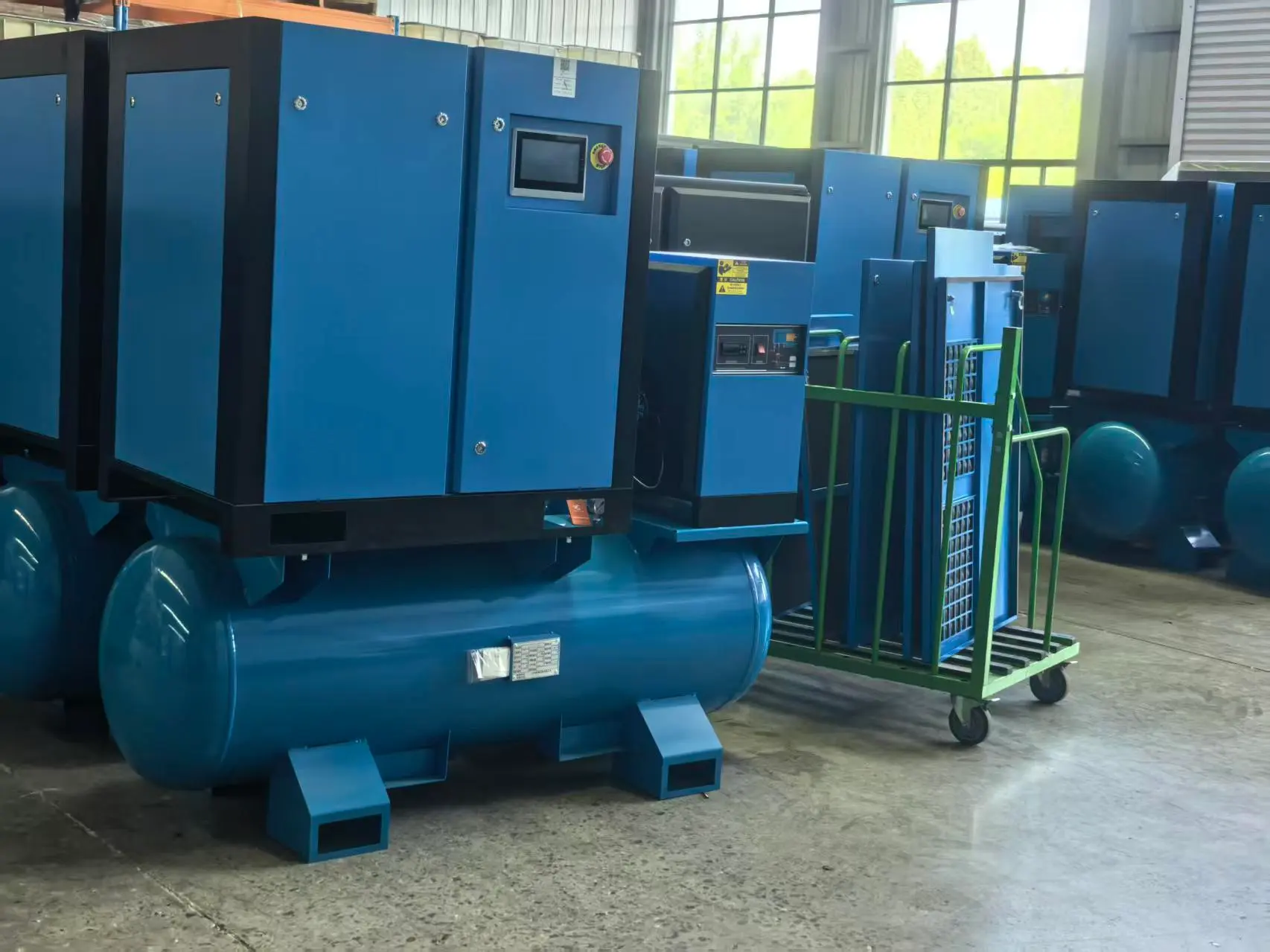
I also compare the complete package rather than the compressor alone. A suitable air dryer, filtration system, receiver, and distribution line may be necessary to achieve the required air quality and stable pressure.
My recommendation is to select the compressor after confirming the laser specifications. The buyer should not choose a model only because it has a higher motor power or a lower purchase price.
What Air Quality, Air Dryer, and Storage Tank Does a Laser Cutting System Need?
The compressor is only one part of a laser cutting air supply system. Moisture, oil, particles, and pressure losses can affect the air delivered to the machine.
I recommend checking the required air purity, pressure dew point, filtration level, receiver capacity, and piping design before purchasing a laser cutting air compressor. The correct configuration depends on the laser manufacturer's requirements and the operating environment.
Why Is Compressed Air Quality Important for Laser Cutting?
I believe air quality deserves the same attention as pressure and airflow. A compressor may provide enough air, but contaminated or wet air can still create problems.
Compressed air can contain water, oil, and solid particles. The amount of each contaminant depends on the compressor type, intake conditions, treatment equipment, and maintenance condition.
During laser cutting, the assist gas interacts with the cutting process. The required air quality depends on the machine design and the cutting results that the operator needs. Moisture and oil contamination can affect the process and may create risks for sensitive components.
I do not automatically recommend an oil-free compressor for every laser cutting application. An oil-injected screw compressor may be suitable when the complete treatment system can meet the required air quality. An oil-free compressor can reduce one source of oil contamination, but it does not remove moisture or particles from the air.
I recommend confirming the acceptable contamination limits with the laser manufacturer. The buyer should then select the compressor and treatment equipment as one complete system.
The ISO 8573-1:2010 standard for compressed air purity classes classifies compressed air according to particles, water, and oil. Buyers can use this standard as a reference when discussing air quality requirements with equipment suppliers.
I also recommend checking air quality at the point where it matters. The air quality at the compressor outlet may differ from the quality at the laser inlet because the system can introduce contamination or moisture after compression.
Which Air Dryer Should I Choose?
I select an air dryer based on the required pressure dew point, operating temperature, ambient conditions, and the laser manufacturer's requirements.
A refrigerated air dryer removes moisture by cooling compressed air so that water condenses and can be separated. This type of dryer is used in many general industrial compressed air systems.
An adsorption dryer can provide a lower pressure dew point when the application needs drier air. However, the correct selection depends on the process and the system specification.
I do not recommend choosing a dryer only by matching its advertised airflow to the compressor's motor power. The buyer should confirm the dryer capacity at the actual operating pressure and inlet conditions.
The following table explains the main differences.
| Equipment | Main function | What I check |
|---|---|---|
| Refrigerated air dryer | Removes moisture through cooling and condensation | Rated flow, operating pressure, inlet temperature, and pressure dew point |
| Adsorption air dryer | Removes moisture to achieve a lower pressure dew point | Required dryness, regeneration method, energy use, and maintenance |
| Water separator | Removes liquid water from compressed air | Flow capacity and separation performance |
| Particulate filter | Removes solid particles | Filtration rating and pressure drop |
| Coalescing filter | Helps remove liquid aerosols and fine oil droplets | Required air quality and compatible filter elements |
| Automatic drain | Removes accumulated liquid | Drain capacity, reliability, and maintenance |
I also check the pressure loss across the dryer and filters. These components must not reduce the delivered pressure below the required level during cutting.
The dryer should have sufficient capacity for the actual system demand. Buyers should also consider high ambient temperatures, especially in hot regions such as Qatar, Saudi Arabia, and other Middle Eastern markets. High temperatures can affect equipment operating conditions and may reduce the performance of some air treatment systems.
I recommend asking the supplier for the rated operating conditions and any capacity correction factors. A dryer that appears large enough under standard conditions may not provide the same performance in a hot installation.
How Large Should the Air Storage Tank Be?
I treat the air receiver as a system component that supports pressure stability and short periods of increased demand. I do not use tank capacity as a substitute for adequate compressor airflow.
A receiver stores compressed air. It can help manage short demand peaks and reduce rapid pressure changes when the compressor and controls are designed correctly.
However, if the laser consumes more air than the compressor can supply for a sustained period, the receiver pressure will eventually fall. A larger tank may extend the time before the pressure drops, but it cannot solve a continuous shortage of compressor capacity.
I recommend selecting the receiver based on the compressor output, operating pressure range, demand pattern, and the manufacturer's system design guidance.
The following table gives examples of receiver sizes that buyers may encounter. These are general examples, not fixed recommendations for laser cutting systems.
| Receiver size | Possible consideration | What I would confirm |
|---|---|---|
| 100 L | Smaller systems or limited storage needs | Whether the tank supports the actual demand pattern |
| 300 L | Systems that need more stored air | Compressor output, pressure range, and available space |
| 500 L | Larger storage requirements | Peak demand, control strategy, and system design |
| 1,000 L or more | Higher storage needs or larger installations | Engineering requirements, safety rules, and operating conditions |
I do not recommend selecting a receiver based on laser power alone. A system with a high airflow requirement may need a different receiver arrangement from a system with lower demand.
The buyer should also check the receiver's rated pressure, nameplate, drainage arrangement, and applicable local inspection requirements. A receiver is a pressure vessel, so it must be suitable for the intended operating conditions.
I also ask whether the receiver is supplied with the compressor package or needs to be purchased separately. This detail affects the quotation, installation space, piping layout, and shipping arrangements.
What Should I Check Before Buying a Complete Laser Cutting Air Compressor System?
I recommend reviewing the complete air system before confirming the order. This approach helps buyers avoid missing equipment and unexpected installation costs.
The buyer should confirm the compressor's pressure and airflow, the dryer capacity, filter specifications, receiver volume, and the required electrical supply. The buyer should also check the distance between the compressor room and the laser cutting machine.
Long pipes, undersized hoses, excessive fittings, and poorly maintained filters can create pressure losses. I therefore recommend checking the distribution system as part of the selection process.
I use this checklist when discussing a laser cutting project with a buyer:
- Confirm the laser model and cutting head.
- Obtain the required pressure and airflow from the machine manufacturer.
- Identify the cutting materials and expected production schedule.
- Confirm whether compressed air will be used as the assist gas.
- Check the required air purity and pressure dew point.
- Select a compressor with verified delivered airflow at the required pressure.
- Confirm the dryer and filtration capacity under actual operating conditions.
- Check the receiver's volume and pressure rating.
- Verify voltage, frequency, phase, and available electrical capacity.
- Confirm maintenance intervals and spare parts availability.
- Review the warranty, technical documentation, and after-sales support.
- Confirm packing, shipping, installation needs, and delivery time.
I believe these checks are especially important for international buyers who purchase equipment from China. A low quotation may not include every accessory or the full air treatment package.
I recommend asking each supplier to list all included equipment and optional items separately. This makes it easier to compare the total project cost and avoid unexpected purchases after delivery.
At Yichen, I focus on helping B2B buyers identify their technical requirements before selecting an air compressor. We supply screw air compressors, piston air compressors, air dryers, air storage tanks, and related spare parts. Buyers can contact me at sale@sdyichen.cn or visit cnscrewair.com to discuss their requirements.
I encourage buyers to provide the laser model, required pressure, airflow, cutting application, operating hours, and local electrical specifications. These details help us evaluate suitable options and discuss the complete air supply system.
Conclusion
I recommend selecting a laser cutting air compressor by confirming required pressure, delivered airflow, air quality, and treatment capacity for the exact machine and cutting process.