Industrial buyers face rising energy costs, changing production needs, and more pressure to control equipment expenses. I believe the right air compressor choice in 2026 starts with understanding the real cost of ownership, not just the purchase price.
The industrial air compressor market in 2026 is moving toward energy-efficient equipment, variable-speed control, oil-free technology, and smarter monitoring. I recommend that buyers compare air delivery, working pressure, energy use, maintenance costs, spare parts, and supplier support before placing an order.
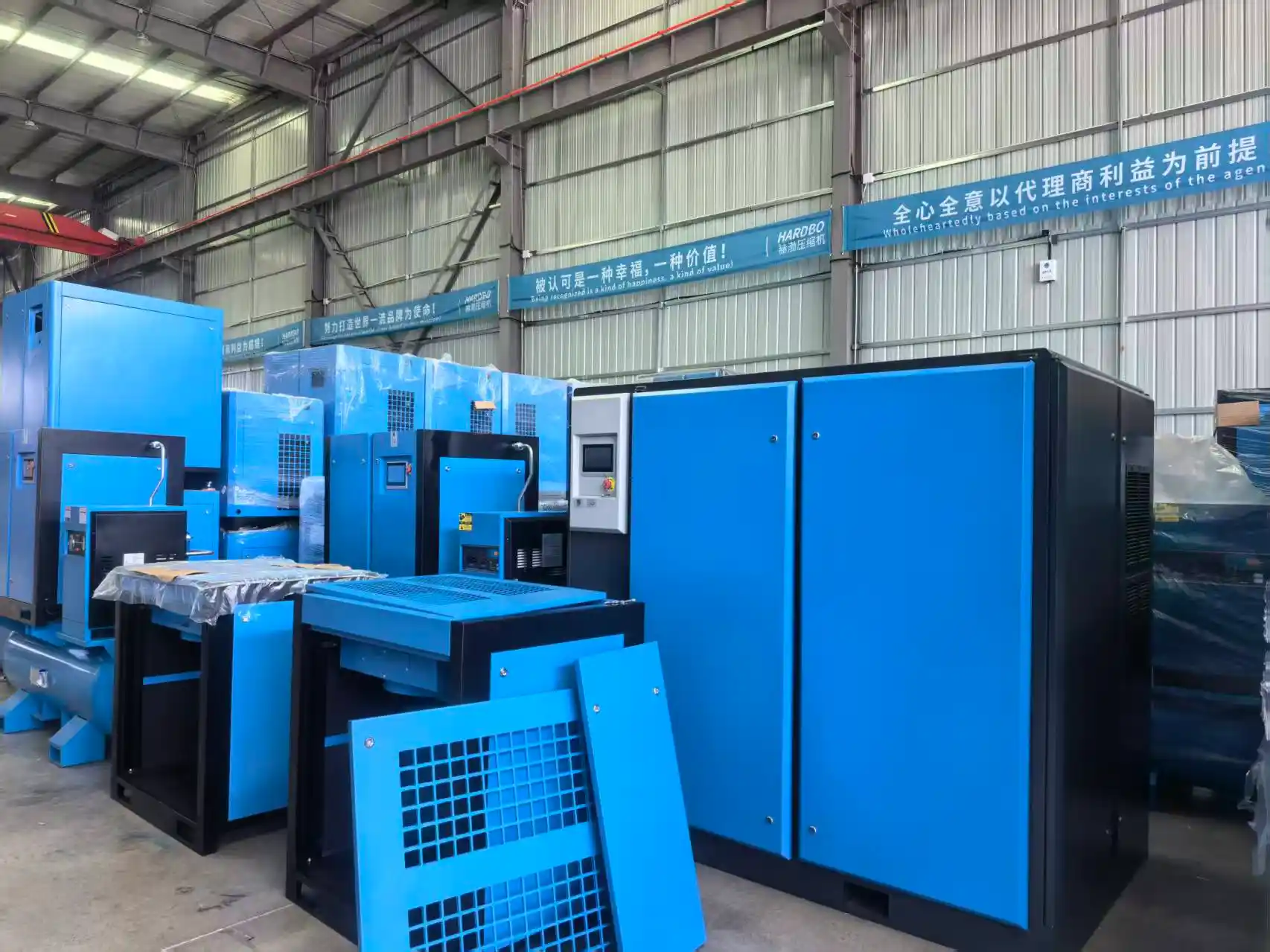
As a supplier of industrial air compressors in China, I see buyers asking more detailed questions about performance, price, and long-term support. Many importers also need equipment that they can sell to different industries in their local markets. They cannot rely on a low quotation alone. They need products that match real working conditions and give their customers a reliable operating experience. In this article, I will explain the main market trends I think buyers should understand in 2026 and how these trends can help them make better purchasing decisions.
Why Is Energy Efficiency Becoming a Major Trend in the Industrial Air Compressor Market in 2026?
Many factories use compressed air every day, but some buyers still focus mainly on the initial equipment price. High electricity bills and unnecessary air losses can make a low-cost machine expensive over time.
I believe energy efficiency is one of the most important factors in industrial air compressor purchasing in 2026. Buyers should compare power consumption, actual air delivery, operating pressure, motor efficiency, and control methods. A suitable compressor can reduce running costs while providing the air supply that production needs.
Why Are Factories Paying More Attention to Energy Costs?
Compressed air supports many industrial processes. Factories use it to operate pneumatic tools, control equipment, move materials, clean components, and support production lines. When a compressor runs for long hours, electricity can become a major part of its total ownership cost.
The U.S. Department of Energy provides useful guidance on compressed air system performance, energy management, and equipment selection. Buyers can review its compressed air systems resources to understand how system improvements can reduce energy waste.
From my point of view, buyers should look beyond the motor power shown on a product label. A 37 kW compressor does not automatically provide better value than another 37 kW model. The actual air delivery, pressure stability, control system, and performance under the buyer's working conditions also matter.
I suggest asking suppliers for clear technical data. Buyers should compare the rated power, free air delivery, discharge pressure, cooling method, and operating conditions. They should also check whether the supplier has test data that supports the quoted performance.

How Can Variable-Speed Compressors Help Buyers?
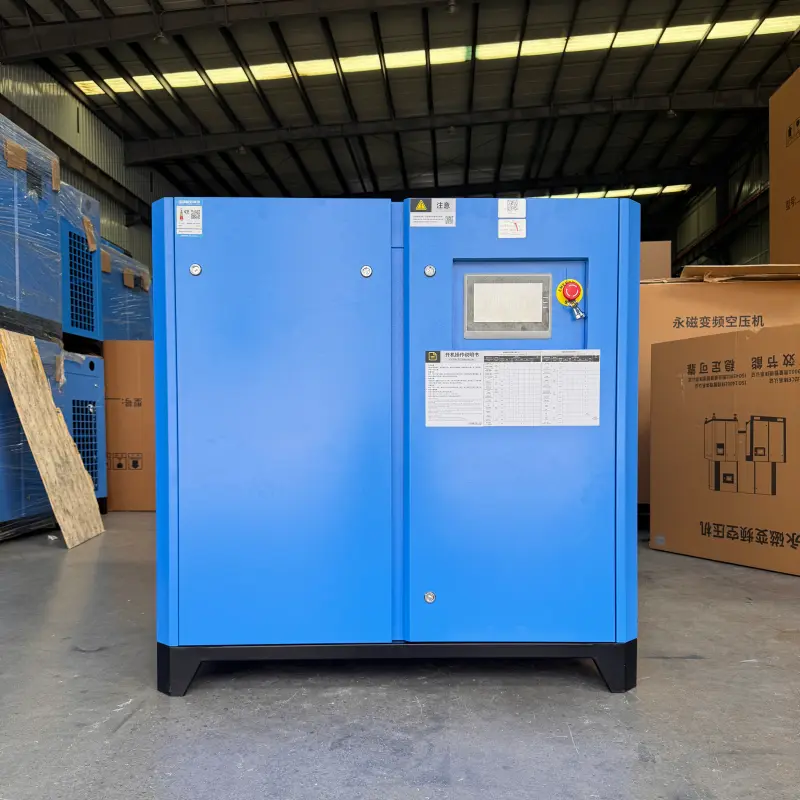
A variable-speed drive, often called a VSD or VFD, adjusts motor speed to match changes in compressed air demand. This can help reduce unnecessary energy use when a factory does not need the compressor to run at full output all the time.
For example, a workshop may use more air during busy production hours and less air during breaks or when only a few machines are running. A correctly selected variable-speed screw air compressor can adjust its output to suit these changing needs.
However, I do not recommend variable-speed equipment for every application without checking the load profile. The expected savings depend on the pattern of air demand, the compressor's operating range, the control settings, and the performance of the complete air system.
| Buyer concern | What I recommend checking | Why it matters |
|---|---|---|
| Electricity cost | Power consumption at expected operating conditions | Helps estimate running expenses |
| Air demand changes | Daily and weekly demand patterns | Helps determine whether variable speed is suitable |
| Pressure stability | Required pressure and allowable variation | Protects production processes |
| System air loss | Leakage, pipe size, and pressure drop | Prevents waste outside the compressor |
| Equipment efficiency | Test data and technical specifications | Makes supplier comparisons more meaningful |
Why Should Buyers Compare Total Cost of Ownership?
I often advise buyers to consider the total cost of ownership instead of choosing the cheapest quotation. This includes the purchase price, electricity, maintenance, consumables, spare parts, installation, and possible production losses caused by equipment downtime.
The U.S. Department of Energy's compressed air guidance also highlights the value of reducing leaks, improving controls, and managing system pressure.
In my view, a buyer who operates a compressor for many hours each day should pay close attention to energy performance. A buyer who uses a small compressor for short periods may need a different cost calculation. The best purchasing decision depends on actual operating conditions, not on a general claim that one technology is always more efficient.
How Is Oil-Free Air Compressor Demand Changing in 2026?
Some industrial buyers need clean compressed air because oil contamination can damage products, affect production quality, or create additional cleaning work. Choosing the wrong compressor and air treatment system can increase costs and cause problems after installation.
I see oil-free technology as an important purchasing trend in 2026, especially in applications where compressed-air purity is essential. Buyers should first define the required air quality, then compare suitable compressor technologies, filtration, drying, and testing requirements.
Which Industries Need Oil-Free Compressed Air?
Oil-free compressors are used in industries where oil contamination must be controlled carefully. These applications can include food and beverage production, pharmaceutical manufacturing, medical applications, electronics, and selected precision manufacturing processes.
However, the required air quality depends on where and how the compressed air is used. Not every application in these industries has the same purity requirements. Some processes have direct product contact, while others use compressed air for general equipment operation.
I recommend that buyers ask the end user to identify the required air purity class and the applicable industry rules. They should also check whether the requirement applies to the compressor itself or to the complete compressed air system.
The ISO 8573-1 compressed air purity classification is a useful reference for understanding how compressed air is classified by contaminants, including particles, water, and oil.
An oil-free compressor can reduce the risk of oil entering the compression chamber, but buyers should not assume that the entire compressed air system will automatically meet every purity requirement. Intake air, pipework, moisture, particles, and other contamination sources still need proper control.
Is an Oil-Free Compressor Always Better Than an Oil-Injected Model?
I do not think buyers should choose an oil-free compressor simply because the technology sounds more advanced. The correct choice depends on the application, required air quality, operating costs, and available budget.
Oil-injected screw compressors remain suitable for many general industrial applications. They are widely used in manufacturing workshops, machinery plants, and other operations where the required air quality can be achieved through a suitable combination of compression and air treatment.
Oil-free compressors can be a better choice when contamination control is a critical production requirement. However, their purchase prices, maintenance needs, and technical requirements can differ from those of oil-injected models.
| Comparison point | Oil-injected screw compressor | Oil-free compressor |
|---|---|---|
| Main application | General industrial air supply | Applications requiring controlled oil contamination |
| Initial investment | Often lower for comparable general-purpose duties | Can be higher, depending on technology and capacity |
| Air treatment | May require suitable oil separation and downstream treatment | May still require filtration and drying |
| Maintenance | Includes oil and oil-filter servicing, as applicable | Depends on compressor design and manufacturer requirements |
| Selection priority | General industrial performance and operating cost | Air purity, process requirements, and operating cost |
| Key buyer question | Can the complete system meet the required air quality? | Can the system meet the specified purity and operating conditions? |
How Should Buyers Check Oil-Free Compressor Specifications?
I recommend asking suppliers for the compressor's operating pressure, rated air delivery, power consumption, cooling requirements, maintenance schedule, and applicable air-quality documentation.
Buyers should also ask about spare parts and service support. An oil-free compressor may be the right technical choice, but the purchase still needs to make commercial sense. If a distributor cannot obtain replacement parts or technical assistance quickly, service problems may affect the end user's production.
I believe the best approach is to connect the technical specification with the customer's actual process. Buyers should avoid paying for an expensive feature that the application does not require. They should also avoid choosing a cheaper machine that cannot meet a documented air-quality requirement.
For importers and industrial equipment dealers, this distinction is especially important. The right product range should include equipment for different applications rather than one model that is presented as the answer to every compressed air problem.
Why Are Smart Monitoring and Automation Important for Air Compressor Buyers in 2026?
Unexpected compressor downtime can interrupt production, delay customer orders, and increase maintenance expenses. Many buyers now want equipment that is easier to monitor and maintain, not just a machine that produces compressed air.
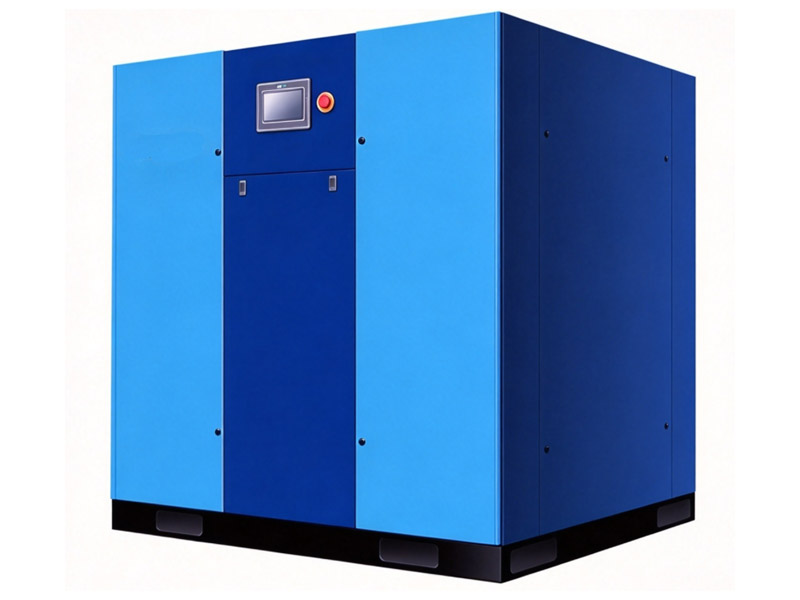
I believe smart monitoring and automatic control will play a larger role in industrial air compressor purchasing in 2026. Buyers should check available control functions, operating alarms, maintenance reminders, and communication options to see whether they fit the needs of their factories.
How Does Smart Monitoring Help Industrial Users?
Traditional compressor maintenance often depends on regular inspections and scheduled servicing. These methods remain important, but they may not show every operating problem as it develops.
Modern compressor controllers can provide information about operating pressure, temperature, running hours, alarms, and maintenance requirements. Some systems also support remote monitoring and data collection. These functions help operators understand the condition of their equipment and identify problems that need attention.
I believe this information is especially useful for factories that operate several compressors or run production for long hours. Maintenance staff can use operating records to plan service work and check whether the equipment is working within its normal range.
However, buyers should understand the difference between basic digital control and advanced remote monitoring. A compressor with a digital display does not necessarily have an internet connection or predictive maintenance functions.
I recommend that buyers ask suppliers to explain exactly what the controller can do. They should confirm whether remote access requires extra hardware, a paid platform, or an internet connection. They should also check whether the monitoring system works with the factory's existing equipment.
Can Automatic Control Improve the Performance of a Compressor System?
Automatic control can help compressors respond to changing air demand. For factories with multiple compressors, a suitable control system can manage the operation of different units and reduce unnecessary running.
For example, a factory may have one main screw compressor and another unit for peak demand or backup. A properly designed control strategy can help distribute the workload according to the system's needs. The actual benefit depends on compressor capacity, air demand, storage, and the control method.
I also believe that buyers should pay attention to pressure settings. A compressor that operates at a higher pressure than necessary may consume more electricity. The correct pressure should meet the needs of the end equipment without creating unnecessary energy costs.
The U.S. Department of Energy's industrial technology resources offer tools for assessing industrial system performance and identifying possible efficiency improvements.
What Should Buyers Ask About Monitoring Features?
I suggest using the following checklist when comparing suppliers.
| Feature | Question to ask the supplier | Purchasing benefit |
|---|---|---|
| Digital controller | Which operating values can the controller display? | Helps operators check machine status |
| Alarm system | Which faults and abnormal conditions trigger alarms? | Supports faster troubleshooting |
| Maintenance reminders | Does the controller track running hours and service intervals? | Helps organize routine maintenance |
| Remote monitoring | Is remote access available, and what equipment is required? | Helps users monitor machines from another location |
| Multiple-compressor control | Can the system coordinate several compressors? | May improve load distribution |
| Technical support | Can the supplier explain alarms and troubleshooting steps? | Helps reduce delays during service problems |
From my perspective, smart functions should solve a real operating problem. Buyers should not pay extra for features that they will never use. A small workshop may only need a reliable controller and clear maintenance instructions, while a large production facility may benefit from centralized monitoring.
I also recommend checking whether the supplier can provide manuals, wiring diagrams, controller instructions, and replacement components. Good documentation can save time when equipment needs maintenance.
How Should Buyers Choose Between Screw, Piston, and Portable Diesel Air Compressors in 2026?
Choosing the wrong compressor type can create problems with air supply, operating costs, and maintenance. A machine that works well in one workshop may not suit a construction site or a factory with continuous production.
I recommend starting with the application, required air delivery, working pressure, operating hours, and installation conditions. Screw, piston, and portable diesel air compressors serve different needs, so buyers should compare them based on the work they must perform.
When Should Buyers Choose a Screw Air Compressor?
I usually recommend evaluating a screw air compressor when a customer needs a steady air supply for regular industrial production. These compressors are commonly used in manufacturing plants, workshops, packaging operations, and industrial equipment systems.
A screw compressor can be suitable for long operating periods when the model is correctly selected for the required air demand. Buyers can also compare fixed-speed and variable-speed options, oil-injected and oil-free designs, and different power ratings.
However, I do not recommend selecting a screw compressor based on motor power alone. Buyers need to confirm the actual free air delivery at the required pressure. They should also check cooling conditions, ventilation, ambient temperature, and maintenance access.
For a distributor, I suggest keeping several capacity options rather than offering one model to every customer. This makes it easier to serve workshops with different production needs.
When Is a Piston Air Compressor a Better Choice?
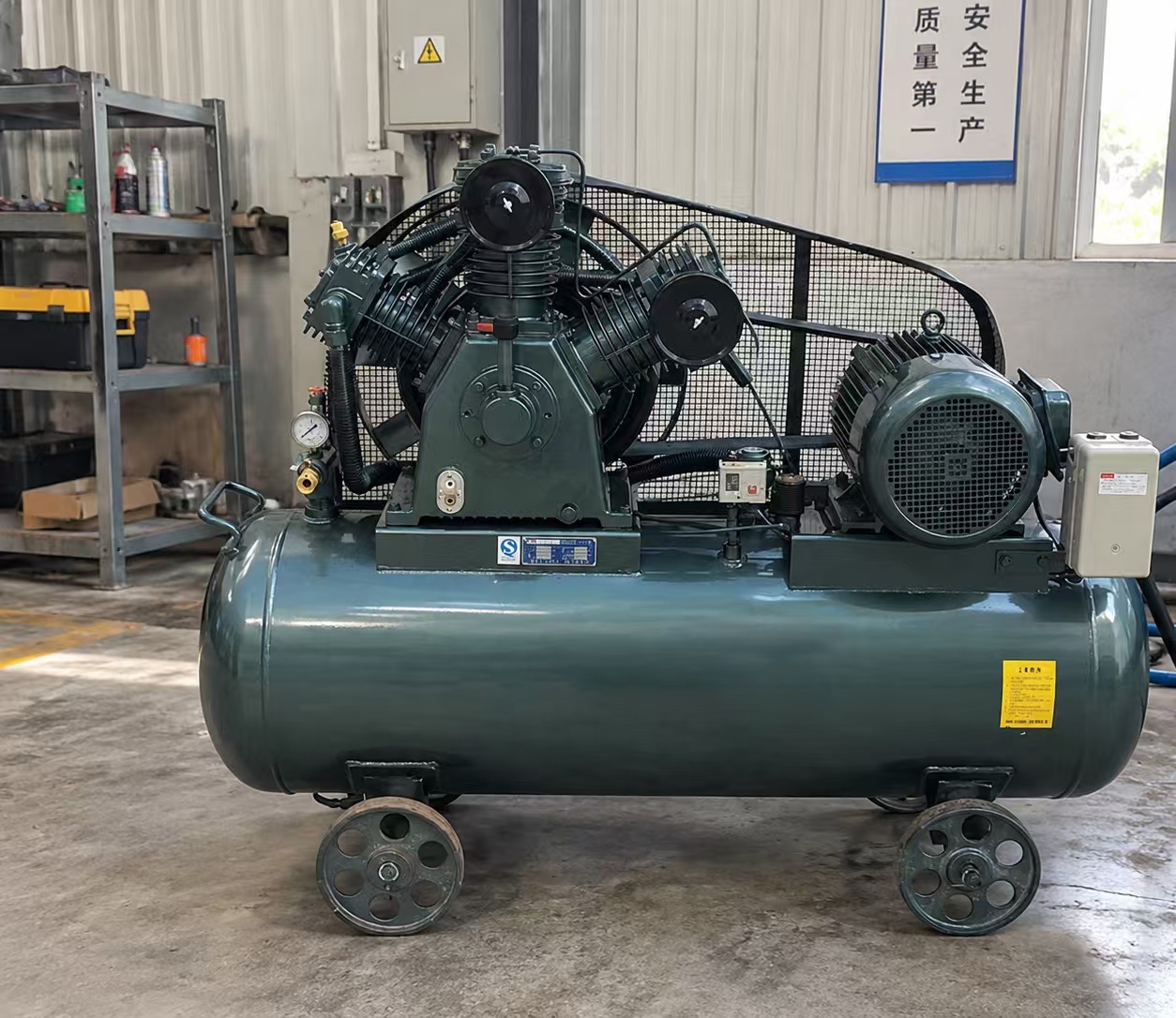
Piston air compressors can be suitable for workshops, repair facilities, intermittent operation, and applications that need a compact compressed air supply.
Their suitability depends on the required air volume, working pressure, duty cycle, and maintenance expectations. A buyer who needs air for short periods may have different requirements from a factory that runs equipment throughout the day.
I advise buyers to check the recommended operating cycle and maintenance instructions before choosing a piston model. They should also compare tank capacity, motor power, air delivery, noise level, and the availability of replacement parts.
A larger piston compressor is not automatically the right answer for a high-demand factory. If the application needs a continuous and stable air supply, buyers should compare suitable screw compressor options as well.
When Should Buyers Consider a Portable Diesel Air Compressor?
Portable diesel air compressors are useful when customers need compressed air at locations without a convenient electrical supply. Construction projects, roadwork, mining operations, and some outdoor maintenance tasks may require this type of equipment.
In these applications, buyers should pay attention to mobility, operating pressure, air delivery, fuel consumption, engine maintenance, and the working environment. The machine must provide enough air for the tools being used at the site.
I also recommend checking transport dimensions, lifting arrangements, weather protection, and access to engine and compressor parts. These details can affect the machine's practical value after delivery.
Portable diesel compressors are not always the best choice for indoor factory use. Buyers should compare local emissions rules, ventilation requirements, fuel expenses, and the availability of electrical power before deciding.
Which Compressor Type Fits Each Application?
The following table provides a starting point for product selection. Buyers should confirm the final model against actual technical requirements.
| Application | Compressor type to evaluate | Main selection factor |
|---|---|---|
| General manufacturing | Screw air compressor | Stable air supply and operating efficiency |
| Small repair workshop | Piston air compressor | Intermittent demand and required pressure |
| Continuous production line | Screw air compressor | Duty cycle and required air delivery |
| Construction site without convenient mains power | Portable diesel air compressor | Mobility and site air demand |
| Mining and outdoor operations | Portable diesel air compressor | Working conditions and tool requirements |
| Workshop with limited space | Compact screw or piston model | Installation space, ventilation, and demand |
| Food or pharmaceutical process | Suitable oil-free system or another verified solution | Required air purity and process rules |
I believe model selection is one of the most important parts of a successful purchase. The supplier should understand the application before recommending a product. If the buyer only receives a price list without technical guidance, the risk of choosing an unsuitable machine becomes higher.
How Can Importers Find Reliable Industrial Air Compressor Suppliers in 2026?
Importers and industrial equipment dealers face more than a product selection problem. They must also control purchasing costs, delivery schedules, quality risks, and after-sales support. A supplier with an attractive quotation may still create difficulties if communication is slow or spare parts are unavailable.
I believe buyers should evaluate suppliers as long-term business partners. They should compare technical capability, factory production, inspection procedures, export experience, delivery arrangements, and the quality of communication before making a purchasing decision.
Why Should Buyers Verify the Supplier's Production Capability?
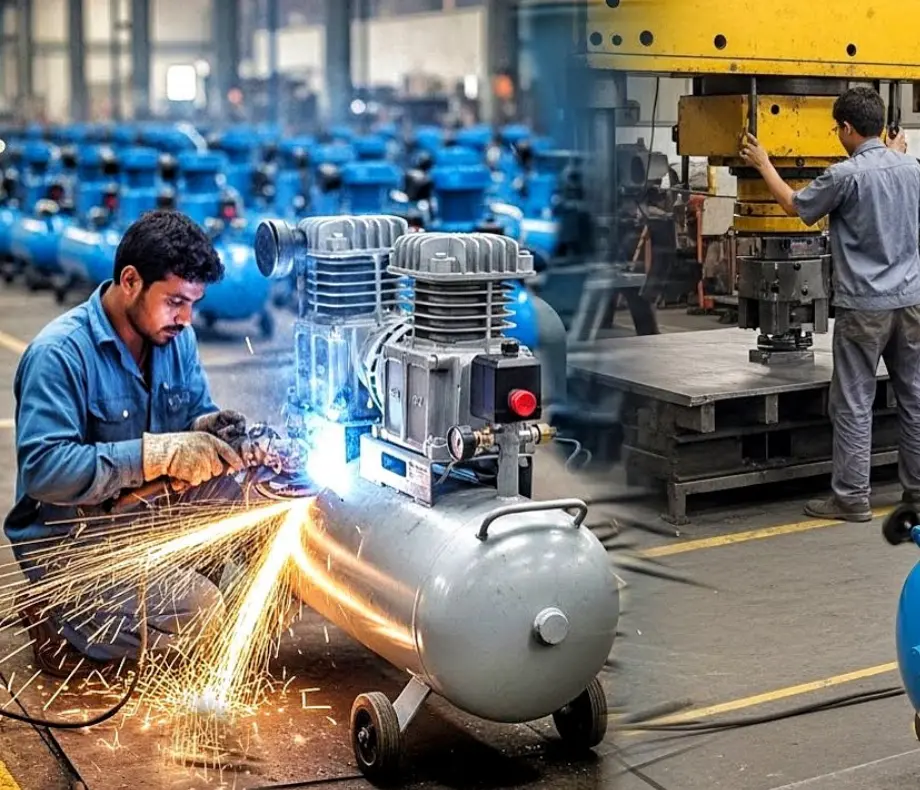
When I evaluate a supplier relationship, I believe production capability and communication matter as much as the quoted price. Buyers should understand whether the supplier manufactures the equipment, assembles it, or sources it from other manufacturers.
A factory with established production processes may offer useful advantages in product coordination, customization, and order planning. However, buyers should verify these claims rather than relying only on a company profile or online photographs.
I recommend asking for a company introduction, factory photographs, production information, product specifications, and relevant quality documents. Buyers can also request a live video inspection or arrange a third-party factory audit when the order value justifies it.
For a first order, I suggest starting with a quantity that matches the buyer's budget, sales forecast, and risk tolerance. A trial order can help the importer assess product performance, packaging, delivery, and communication before expanding the relationship.
The supplier should explain any minimum order requirements clearly. Buyers should also confirm which models are available, which specifications can be customized, and whether customized orders require extra production time.
How Should Buyers Compare Quotations From Different Suppliers?
I do not recommend comparing quotations by price alone. Different suppliers may quote different configurations, air delivery ratings, accessories, warranty terms, and delivery conditions.
For example, one quotation may include an air dryer and storage tank, while another may cover only the compressor. A lower price does not necessarily mean a lower total project cost if the buyer must purchase the missing components separately.
I suggest preparing a comparison sheet before requesting quotations. This helps the purchasing team check whether each offer meets the same requirements.
| Comparison item | Information to confirm |
|---|---|
| Product model | Exact model and configuration |
| Rated power | Motor power and applicable electrical specifications |
| Air delivery | Rated flow at the stated operating pressure |
| Working pressure | Required operating pressure and available options |
| Air treatment | Dryer, filters, and other required components |
| Air storage | Tank capacity and applicable safety requirements |
| Customization | Logo, color, voltage, frequency, and other options |
| Spare parts | Recommended spare parts and supply lead times |
| Warranty | Coverage, exclusions, and warranty period |
| Delivery | Production lead time, packaging, and shipping terms |
| Payment | Deposit, balance, and accepted payment methods |
I also recommend confirming that the quotation identifies the exact configuration. Buyers should not assume that two products with the same power rating will provide the same air delivery or have the same features.
Why Are Spare Parts and After-Sales Support Important?
A compressor purchase does not end when the machine leaves the factory. The end user may need filters, lubricants, separators, belts, valves, or other service components during the equipment's working life. The exact requirements depend on the compressor design and manufacturer.
For importers, spare parts availability can directly affect customer satisfaction. If a dealer cannot obtain a replacement part quickly, a small maintenance issue may become a major service problem.
I recommend asking suppliers for a recommended spare parts list, maintenance schedule, parts identification information, and estimated delivery times. Buyers should also check whether technical support is available in English and whether the supplier can help identify parts by model and serial number.
At Yichen, I focus on matching the compressor and its supporting equipment to the buyer's application. I believe clear technical communication before an order is placed can prevent many problems after delivery.
How Can Buyers Reduce Risk When Importing From China?
I suggest following a clear purchasing process:
- Define the application, required air delivery, pressure, and air quality.
- Request comparable technical quotations from suitable suppliers.
- Verify the supplier's company information and production capability.
- Confirm the product configuration, accessories, warranty, and spare parts.
- Agree on inspection requirements, packaging, delivery terms, and payment conditions.
- Review the final documents before shipment and keep the supplier's technical records for future service.
Buyers should also check the import regulations, electrical requirements, and safety rules that apply in the destination country. These requirements can differ by market and product type.
For wholesalers, I recommend evaluating the supplier's ability to support repeat orders. Stable product specifications, clear communication, and predictable lead times can make inventory planning easier. A reliable supply relationship can also help dealers respond to local customers more quickly.
Conclusion
In 2026, I recommend choosing industrial air compressors based on energy efficiency, application requirements, reliable supply, and long-term service support rather than purchase price alone.