Many buyers choose a piston air compressor by price alone. The wrong pressure, tank size, or airflow can reduce productivity, increase maintenance costs, and create problems during daily operation.
To choose the right piston air compressor, I recommend checking the required working pressure, actual free air delivery, air receiver capacity, duty cycle, motor power, and application requirements. Buyers should compare these specifications before comparing prices.
When I help industrial equipment buyers compare piston air compressors, I focus on how the machine will work in the customer's business. A small workshop, an automotive repair center, and a manufacturing plant may all need compressed air, but their requirements can be very different. I do not believe that one compressor model can meet every application. I prefer to understand the buyer's air consumption, working hours, available space, and budget before recommending a suitable model. In this guide, I will explain how I evaluate pressure, tank capacity, and airflow. I will also discuss motor power, maintenance, spare parts, and supplier selection so buyers can make a more informed purchasing decision.
How Do I Choose the Right Pressure for a Piston Air Compressor?
A compressor with the wrong pressure rating may not operate pneumatic tools or production equipment correctly. Buyers can avoid this problem by checking the actual pressure requirements before ordering.
I choose a piston air compressor by confirming the pressure required by the connected equipment, the pressure loss in the air distribution system, and the compressor's rated operating range. I never select a model based on its maximum pressure alone.
What Is the Difference Between Working Pressure and Maximum Pressure?
I often see buyers compare compressor models by looking only at the highest pressure shown in the product description. I believe this is an incomplete way to evaluate a machine.
Working pressure is the pressure at which the compressor or compressed air system is expected to operate under the specified conditions. Maximum pressure is a limit defined by the equipment design or specification. These values do not always describe the same operating condition.
For example, a supplier may offer several piston air compressors with different pressure ratings. A buyer who needs 8 bar of working pressure should not automatically select a model advertised with a maximum pressure of 10 bar. The buyer should confirm the model's rated operating pressure, delivery performance at that pressure, and permitted pressure range.
I also recommend checking the pressure required at the point of use. A pneumatic tool may need a particular inlet pressure to work correctly. The compressor may need to provide a slightly higher pressure to cover losses in the pipes, filters, hoses, and fittings.
However, I do not recommend increasing pressure without a clear reason. Higher pressure can increase energy consumption and may place extra demands on the system. A leak or restricted filter may be the real cause of low pressure.
I use the following table to compare pressure specifications before discussing a final model with a buyer.
| Pressure specification | What I check | Why it matters |
|---|---|---|
| Required working pressure | Pressure needed by the connected equipment | Helps establish the actual application requirement |
| Rated compressor pressure | Pressure stated for the selected model | Helps confirm that the compressor matches the application |
| Maximum permitted pressure | Manufacturer's stated operating limit | Helps prevent incorrect selection and operation |
| Pressure at the point of use | Pressure available after system losses | Shows whether the equipment can receive the required pressure |
| Pressure switch settings | Cut-in and cut-out pressure, where applicable | Helps confirm the compressor's operating cycle |
| Air receiver rating | Permitted pressure marked on the receiver | Helps ensure the receiver is suitable for the system |
I believe buyers should ask suppliers to explain each pressure value in the quotation. A clear explanation can prevent confusion when several models have similar names but different specifications.
Which Pressure Rating Is Suitable for Different Applications?
I start with the application rather than a general pressure recommendation. Different tools and processes can have different requirements, even when they use similar compressor designs.
For example, a small repair workshop may use pneumatic tools with relatively modest air demand. A manufacturing process may require a stable supply at a defined pressure for longer periods. A specialized application may need a higher pressure rating, but the buyer must confirm this requirement from the equipment manufacturer.
The following table gives general examples for initial discussions. These are illustrative application ranges, not universal requirements or recommendations for a specific product.
| Application | Example pressure range for initial evaluation | What I would confirm |
|---|---|---|
| General pneumatic tools | Around 6–8 bar | Tool manufacturer's inlet pressure and airflow |
| Automotive repair workshop | Around 7–10 bar | Tool requirements and simultaneous usage |
| Small manufacturing workshop | Around 7–10 bar | Production equipment specifications and peak demand |
| Spray painting equipment | Often around 6–8 bar at the tool, depending on the equipment | Required air pressure, airflow, filtration, and moisture control |
| Specialized industrial process | Depends on the process | Equipment manufacturer's technical requirements |
I do not treat these ranges as final selection criteria. Some tools require different pressures, and the pressure measured at the compressor outlet may differ from the pressure available at the tool.
I also ask buyers whether several machines will operate at the same time. A compressor may meet the pressure requirement for one tool but struggle when several tools draw air together.
I recommend confirming the required pressure and airflow from the equipment manuals. If the buyer cannot provide this information, I suggest collecting the model numbers of the connected tools and checking their specifications before quoting a compressor.
How Can I Verify Pressure Performance Before Purchasing?
I believe technical documents are more useful than a product title alone. When I compare piston air compressors, I look for the rated pressure, airflow, motor power, receiver capacity, and operating instructions.
I also ask the supplier how the published performance data was measured. The buyer should know whether the quoted airflow represents theoretical displacement or actual delivered air. These values can differ significantly.
For formal performance verification, buyers can review ISO 1217:2009, Displacement Compressors — Acceptance Tests. This standard specifies methods for testing volume flow rate and power requirements for displacement compressors. Buyers should agree with the supplier on the applicable test conditions and acceptance criteria before placing an order.
I also recommend requesting the technical data sheet for the exact model. If the buyer needs a specific pressure for an industrial project, the buyer should confirm that the supplier can provide the required performance data under the agreed conditions.
I do not recommend choosing a compressor because a sales representative says it is suitable for every application. I prefer to match the published specifications with the actual requirements. This approach gives buyers a clearer basis for comparing suppliers and reduces the risk of purchasing an unsuitable machine.
How Do I Select the Right Air Receiver Tank Capacity and Airflow?
A compressor may have the correct pressure rating but still fail to meet the needs of a workshop. Buyers must also consider how much air the equipment consumes and how the receiver supports changing demand.
I select air receiver capacity and compressor airflow by reviewing actual air consumption, peak demand, operating cycles, and the required pressure stability. I treat the receiver as a storage and system support component, not as a replacement for sufficient compressor output.
How Much Airflow Does My Application Need?
I consider airflow one of the most important specifications in a piston air compressor buying guide. The compressor must deliver enough air to support the connected equipment at the required working pressure.
Buyers may see airflow described as liters per minute (L/min), cubic meters per minute (m³/min), or cubic feet per minute (CFM). These units can be converted, but buyers should compare the figures under equivalent pressure and reference conditions.
The following conversions are useful:
- 1 m³/min = 1,000 L/min.
- 1 CFM is approximately 28.32 L/min.
- 100 L/min is approximately 0.1 m³/min.
I recommend checking whether the supplier lists theoretical displacement, free air delivery (FAD), or another defined airflow measurement. Theoretical displacement describes the volume swept by the compressor's moving parts. Actual delivered airflow can be lower because of internal losses and operating conditions.
When a buyer compares two compressors, I do not use motor power alone to decide which machine supplies more air. I compare the stated delivery at the required pressure and ask for the relevant performance data.
For example, a workshop may use a pneumatic grinder, an impact wrench, and a cleaning gun. The buyer should check the air consumption of each tool and determine which tools operate at the same time. The combined demand can then be estimated based on the real usage pattern.
The following example shows how I organize this information. All values are hypothetical and are provided only to demonstrate the calculation method.
| Air-consuming equipment | Example air consumption | Expected use |
|---|---|---|
| Pneumatic tool A | 150 L/min | Regular use |
| Pneumatic tool B | 100 L/min | Regular use |
| Cleaning gun | 80 L/min | Intermittent use |
| Total if all three operate together | 330 L/min | Peak simultaneous demand |
I would not automatically add every tool's maximum consumption if the tools never operate together. However, I would not assume that only one tool operates at a time without checking the workflow.
I also consider air leaks and future equipment additions. A buyer should avoid adding an arbitrary safety margin without understanding the actual demand. A clear demand estimate helps prevent both undersizing and unnecessary oversizing.
What Air Receiver Tank Capacity Should I Choose?
I explain tank capacity as the volume of compressed air storage available in the receiver. Common product descriptions may list receiver capacities such as 24 L, 50 L, 100 L, 200 L, or larger sizes. These are examples of common product categories, not a recommendation for every application.
The receiver helps supply air during short periods when demand exceeds the compressor's immediate delivery. It can also reduce frequent motor starting in some systems and support more stable pressure when the compressor and controls are correctly selected.
However, I do not believe a larger receiver can solve every airflow problem. If a tool consumes more air than the compressor can deliver for a long period, the receiver pressure will eventually fall. The compressor must still provide enough average airflow for the application.
I use the following table to explain the differences between receiver sizes.
| Receiver capacity | Typical consideration | What I would check |
|---|---|---|
| 24–50 L | Compact equipment and some intermittent applications | Tool demand, portability, and compressor recovery time |
| 100 L | General workshop applications with moderate storage needs | Actual air consumption and available installation space |
| 200 L | Applications that may need more stored air | Peak demand, pressure range, and compressor delivery |
| 300 L or larger | Systems with higher storage needs | System design, pressure requirements, applicable rules, and space |
These examples do not mean that a 100 L receiver is always suitable for a workshop or that a 200 L receiver is always better. The correct size depends on the compressor's output, the pattern of air consumption, the control system, and the permitted pressure range.
I also ask buyers whether the receiver is included with the compressor or supplied separately. A package with a built-in receiver may save installation space, while a separate receiver may provide more flexibility for a larger system.
Buyers should check the receiver's nameplate, permitted working pressure, inspection requirements, and applicable local regulations. A receiver is a pressure vessel, so I do not recommend selecting it by volume alone.
How Do Pressure, Tank Capacity, and Airflow Work Together?
I explain these three factors together because they serve different purposes.
Pressure describes the force available to drive the equipment. Airflow describes how much air the compressor can deliver over time. Tank capacity describes how much compressed air the receiver can store within its permitted operating range.
A buyer can have a high-pressure compressor with insufficient airflow. Another buyer can have a large tank that provides short-term support but cannot keep up with continuous air consumption.
I use the following comparison to show why all three specifications matter.
| Selection factor | Main question | Common selection mistake |
|---|---|---|
| Pressure | Can the compressor provide the required pressure? | Selecting by maximum pressure alone |
| Airflow | Can the compressor supply enough air during operation? | Comparing motor power instead of delivered airflow |
| Tank capacity | Can the receiver support the actual demand pattern? | Assuming a larger tank can replace insufficient compressor capacity |
| Duty cycle | Can the compressor operate within its permitted working pattern? | Running a model beyond its specified operating limits |
| Recovery time | How quickly can the system restore receiver pressure? | Ignoring the relationship between demand and compressor output |
I believe this is where buyers should spend time before requesting quotations. A supplier can provide a more suitable recommendation when the buyer explains the equipment, operating schedule, pressure requirement, and expected air consumption.
I also recommend checking the complete system. A correctly sized compressor can still deliver poor results if the pipes are too small, the filters are restricted, or the system has significant leaks.
For more general information about compressed air systems, buyers can review the U.S. Department of Energy's compressed air resources. These resources discuss system performance, energy use, and opportunities to reduce waste.
How Can I Avoid Buying an Oversized or Undersized Compressor?
I believe buyers should base the final selection on measured demand or a clear estimate rather than a guess. An undersized compressor may run for too long and fail to maintain pressure during peak demand. An oversized compressor may cost more than necessary and may operate inefficiently if its load pattern does not suit the application.
I start by listing every air-consuming device. I then record each device's airflow requirement, pressure requirement, and expected operating time. I identify which devices work at the same time and which ones operate intermittently.
For an existing installation, I recommend measuring system pressure and airflow over a representative production period when practical. A professional compressed air assessment may help identify peak demand, leaks, and other issues that are difficult to estimate from equipment labels alone.
For a new workshop, I ask the buyer to provide the equipment manuals and the expected production schedule. If the buyer plans to add machines later, I discuss the likely increase in demand rather than automatically selecting a much larger compressor.
I also consider the consequences of a temporary pressure drop. Some applications can tolerate short periods of reduced air supply. Other applications need a more stable supply. This difference can affect the required receiver capacity and the choice of control system.
I do not recommend adding an arbitrary percentage to every airflow estimate. I prefer to identify specific future needs and explain how they affect the model selection.
How Do I Compare Piston Air Compressor Models, Operating Costs, and Suppliers?
A low purchase price can look attractive, especially when buyers compare several suppliers from China. However, a compressor that does not match the application may create higher operating costs and more maintenance problems.
I compare piston air compressors by checking verified airflow, pressure, motor power, duty cycle, receiver specifications, energy use, spare parts, warranty terms, and supplier response time. I then evaluate the total cost of ownership instead of choosing the lowest quotation.
How Do I Compare Technical Specifications Between Suppliers?
I recommend preparing one specification sheet before requesting quotations. This makes it easier to compare offers that use different model names or product descriptions.
I ask each supplier to quote the same required pressure, airflow, motor power range, receiver capacity, and electrical configuration where applicable. I also ask for details about the compressor head, motor, cooling method, lubrication system, and included accessories.
The following table shows the information I would include in a comparison sheet.
| Specification | Supplier A | Supplier B | My evaluation method |
|---|---|---|---|
| Model number | To be confirmed | To be confirmed | Check the exact model and configuration |
| Rated working pressure | Quoted value | Quoted value | Match the application requirement |
| Airflow | Quoted value | Quoted value | Confirm measurement type and pressure |
| Motor power | Quoted value | Quoted value | Check electrical requirements and performance |
| Receiver capacity | Quoted value | Quoted value | Confirm volume and pressure rating |
| Duty cycle | Quoted value | Quoted value | Check the permitted operating pattern |
| Included accessories | Quoted list | Quoted list | Confirm the complete supply scope |
| Spare parts | Quoted list | Quoted list | Check availability and replacement requirements |
| Warranty | Quoted terms | Quoted terms | Review coverage, exclusions, and claim process |
| Delivery time | Quoted period | Quoted period | Confirm production, inspection, and shipping schedules |
I do not accept a comparison based on price and motor power alone. If one supplier quotes a higher airflow, I ask whether the value represents actual delivered air and whether both quotations use comparable test conditions.
I also check whether the quotation includes the receiver, pressure switch, safety valve, gauges, filters, and other accessories that the application requires. These items can affect the final cost.
When the purchase is for resale, I also consider the local market. A distributor may need several models for different customers. In this case, I recommend confirming model availability, minimum order quantities, spare parts, and OEM options before committing to a large purchase.
I believe a clear technical comparison helps buyers negotiate more effectively. It also reduces the chance of discovering missing components after the equipment arrives.
How Can I Estimate the Total Cost of Ownership?
I encourage buyers to look beyond the initial purchase price. The total cost of ownership includes the purchase cost, electricity, maintenance, spare parts, installation, and other expenses over the period of use.
Electricity can be an important cost for equipment that operates frequently. The actual cost depends on the motor's electrical input, operating hours, load pattern, and local electricity price.
For an initial estimate, I use this formula:
Annual electricity cost = Average electrical input (kW) × Annual operating hours × Electricity price per kWh
For example, consider a hypothetical piston air compressor with an average electrical input of 2.2 kW. If it operates for 2,000 hours per year and electricity costs $0.12 per kWh, the estimated annual electricity cost is:
2.2 × 2,000 × $0.12 = $528.
This example is for illustration only. Actual power consumption may change with loading, unloading, operating pressure, and the compressor's condition. Buyers should use verified or measured electrical input where possible.
I also recommend including the cost of oil, filters, valves, rings, gaskets, and other service parts when they apply to the selected model. The maintenance schedule should come from the manufacturer's instructions.
| Cost category | What I include |
|---|---|
| Purchase cost | Compressor, receiver, and agreed accessories |
| Energy cost | Electricity over the expected operating period |
| Maintenance cost | Scheduled service and consumables |
| Spare parts | Parts that may need replacement during use |
| Installation | Electrical connection, piping, and other setup work |
| Downtime risk | Potential production losses caused by equipment failure |
| Logistics | Packing, freight, import charges, and local delivery where applicable |
I do not claim that the most expensive model always has the lowest lifetime cost. A more expensive machine may offer features that are useful for one application but unnecessary for another.
I prefer to compare realistic operating conditions. A compressor that operates for a few hours each week needs a different cost assessment from one that supports a busy workshop every day.
For buyers who resell equipment, the calculation should also include the expected selling price, local service requirements, and the cost of keeping spare parts available. These details help protect profit margins and improve customer support.
What Should I Check About Maintenance and Spare Parts?
I believe spare parts availability is an important purchasing factor, especially for buyers who import equipment from China. A compressor can become difficult to maintain if the correct parts are unavailable or the supplier cannot identify the required components.
Before ordering, I ask the supplier for a recommended spare parts list. For a piston air compressor, this list may include valves, piston rings, gaskets, filters, lubricants, and other parts that depend on the model.
I also recommend checking the model number and the availability of technical documentation. A clear parts diagram and operating manual can help the buyer identify the correct replacement parts later.
I use the following checklist when discussing maintenance support:
- Confirm the recommended service intervals.
- Check the correct lubricant specification, if applicable.
- Ask which consumable parts should be stocked.
- Confirm the part numbers for common replacements.
- Request the operating manual and parts diagram.
- Check warranty coverage and exclusions.
- Ask how technical questions and warranty claims are handled.
- Confirm the expected lead time for spare parts.
I do not recommend using one maintenance schedule for every piston compressor. Operating hours, ambient conditions, dust, humidity, and the manufacturer's instructions can affect the service requirements.
I also remind buyers to drain accumulated condensate from the receiver according to the equipment instructions and applicable safety requirements. Moisture management can help reduce corrosion risks and improve air quality.
For distributors, I believe a small stock of common spare parts can improve service to local customers. However, the stock should be based on the models sold and the actual service demand. Buying a large quantity of parts without understanding local needs can tie up working capital.
How Do I Choose a Reliable Chinese Piston Air Compressor Supplier?
I know that international buyers often compare several suppliers before placing an order. They want competitive prices, clear technical answers, and a reliable delivery process.
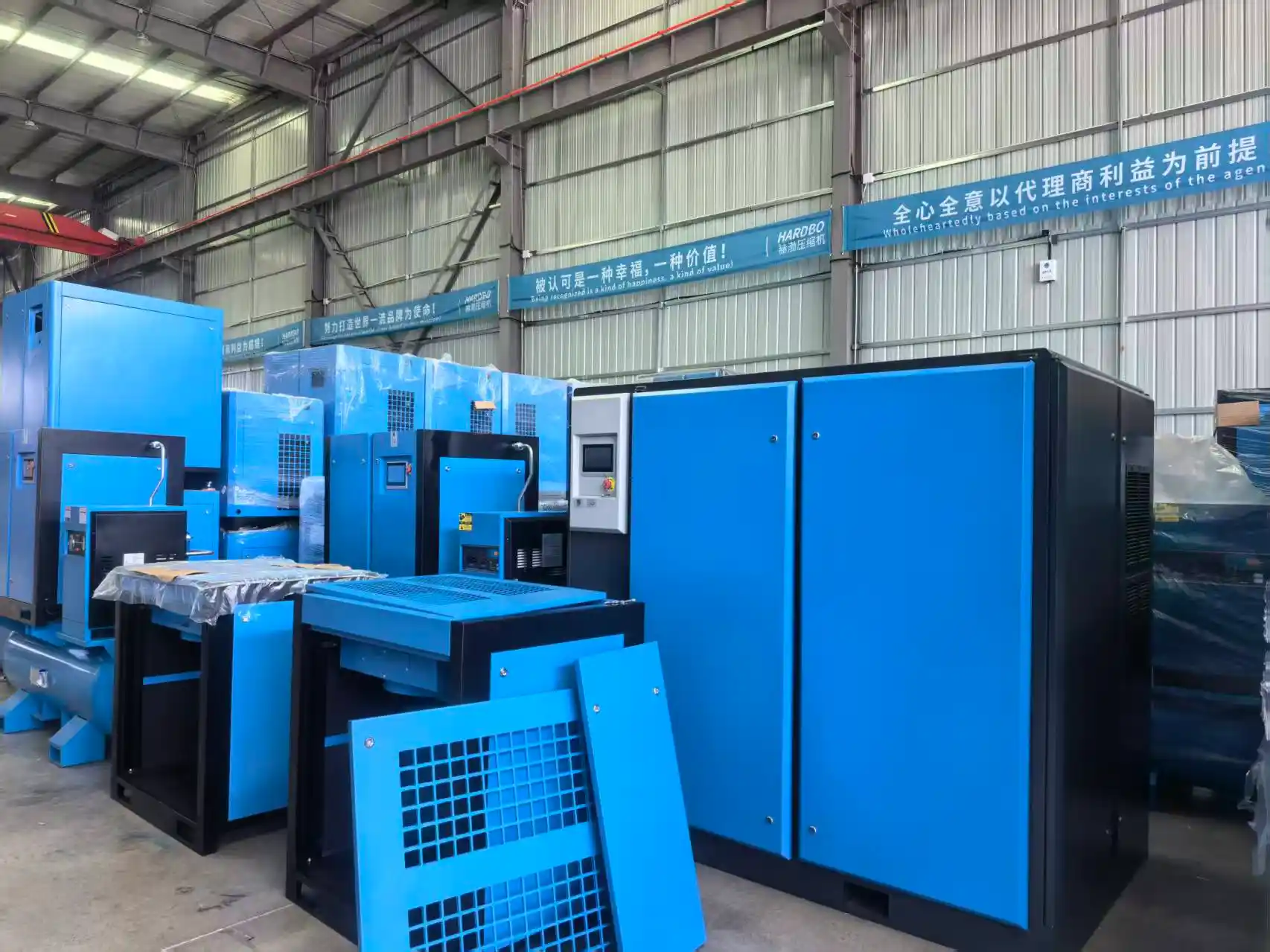
I recommend checking the supplier's business information, product range, technical documents, communication quality, and ability to provide the required configuration. Buyers can ask for factory information, production photographs, product videos, and inspection arrangements where appropriate.
I also suggest requesting a formal quotation that includes the exact model, pressure rating, airflow, motor power, receiver capacity, included accessories, packing details, delivery time, payment terms, and warranty conditions.
For larger or project-based orders, buyers may arrange an inspection before shipment. The buyer and supplier should agree on what will be checked, how performance will be assessed, and which documents will be provided.
I believe a supplier should answer technical questions directly. If a buyer asks about airflow at a specific pressure, the supplier should provide the relevant data rather than simply recommending a larger motor.
I also understand that some importers want to start with a small trial order. I recommend confirming the minimum order quantity and whether the supplier can provide spare parts or several models in one shipment. These details can help the buyer test the market before making a larger commitment.
At Yichen, I focus on understanding the buyer's application and technical requirements before discussing a suitable compressor. We supply air compressor products and related equipment for B2B customers. Buyers can contact me at sale@sdyichen.cn or visit cnscrewair.com to discuss their requirements.
I encourage buyers to send their required pressure, estimated airflow, tank capacity preference, operating hours, and local electrical specifications. This information helps us start with the right technical questions and compare suitable options.
Conclusion
I recommend selecting a piston air compressor by matching pressure, airflow, and receiver capacity to the application, then comparing maintenance costs, spare parts, and supplier support.